5 moments during a bird bath that teach children about the ecological cycle: real and awe-inspiring.
Bird baths: a unique value of ecological lessons
In a family garden, a bird bath is not only a tool for providing water and beautifying the environment but also an important window for children to understand ecological cycles and natural laws. By observing birds’ daily behavior of using bird baths , children can see firsthand how each link in the ecological cycle operates in the microenvironment. A bird bath provides a fixed focal point, allowing children to observe animal behavior, water use, environmental interaction, plant growth, and microbial activity up close, thereby understanding how the elements in an ecosystem depend on each other.
Many parents believe that knowledge about ecological cycles is difficult to impart through daily experiences, but bird bathing naturally aligns with children’s sensory development. Children can directly observe birds drinking, preening, foraging, communicating, and interacting with their environment. This real, tangible experience is more vivid and impactful than books or classroom explanations.
Moment 1: Drinking Behavior Reveals the Water Cycle and Biological Dependence
When children observe birds drinking in the bird bath , they discover that each time they drink, it’s part of the ecological cycle. Birds rely on water to maintain their physiological functions, and their use of water demonstrates the dependence of organisms in nature on water resources. Children will see how different birds take turns drinking and how they observe their surroundings before deciding whether to approach. This not only conveys safety awareness but also helps children understand the rational use of limited resources by organisms in an ecosystem.
Through observation, children can learn the importance of the water cycle: how rainwater, evaporation, soil water absorption, and plant water storage work together to maintain the living environment of organisms. Drinking water becomes a gateway for children to understand the ecological cycle, making them realize the preciousness of water resources and their core role in the lives of living organisms.
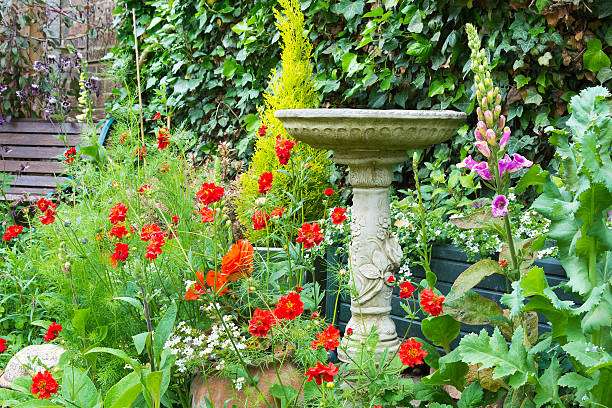
Moment Two: The act of feather washing demonstrates natural cleansing and energy circulation.
Bird preening is an integral part of the ecological cycle. Children observing birds will notice their actions: flapping the water, wetting their feathers, and preening their feather oils. Preening not only maintains a bird’s body temperature, flight ability, and feather health, but also involves energy conversion and circulation. The temperature and cleanliness of the water directly affect the preening process, allowing children to directly experience the impact of the microenvironment on biological behavior.
Meanwhile, the water droplets produced during molting moisten the surrounding vegetation, and the tiny water droplets falling into the soil promote water absorption by plants. This process is a true reflection of the small-scale cycle of water resources. By observing birds molting, children not only understand the importance of biological self-maintenance but also connect it to the subtle energy flow between organisms and their environment.
Moment Three: Foraging and Seed Dispersal Reveal Food Chain Connections
Bird baths are often surrounded by garden plants. When children observe bird behavior, they can see that birds begin to forage after drinking or preening, or they feed on plant fruits and seeds near the bird bath . During foraging, the birds carry seeds to other areas, promoting plant reproduction. This behavior visually demonstrates the role of the food chain and seed dispersal in the ecological cycle.
Children are amazed by the ecological chain reaction behind the behavior of a small bird: a bird takes off from its bird bath , lands on another patch of grass, and seeds are scattered. This tiny moment connects the entire ecological cycle of water circulation, energy transfer, and species reproduction. Through this real-life observation, children understand and resonate with ecological cycles more easily than adults because they focus on the entire process of behavior and change.
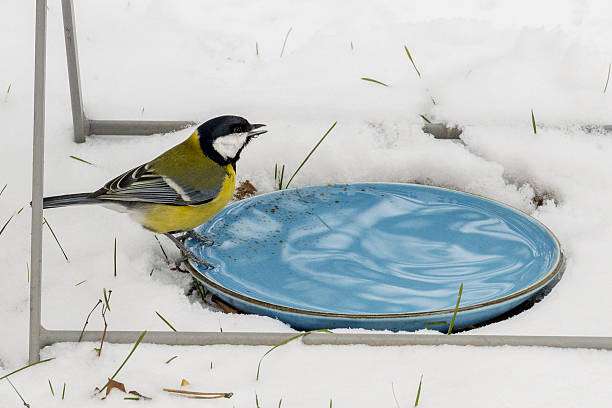
Moment Four: Insights from Social Interaction and Information Circulation
Around the bird bath , children can observe the social behaviors of different birds. Sometimes larger birds use the bird bath first , and other smaller birds observe their behavior before approaching. Sometimes birds will warn each other or give warning signals near the bird bath . Through these subtle interactions, children can understand the importance of information flow in an ecosystem.
Information circulation is a crucial component of ecological cycles; behaviors such as alertness, foraging, and migration are transmitted among bird groups through observation and imitation. Children can grasp that ecosystems do not operate unidirectionally but rather form complete cycles through the flow of behavior, information, energy, and resources. This understanding has a profound impact on cultivating children’s systems thinking and ecological awareness.
Moment Five: Seasonal Changes and Ecological Rhythms
As the seasons change, the frequency of bird bathing , the types of birds, and the state of plant growth all change. Children will observe how water temperature, sunlight exposure, and vegetation height affect bird behavior. For example, during the hot summer months, birds increase the frequency of molting to cool down, while in winter, water sources may freeze, reducing bird activity.
This change allows children to experience the dynamic nature of ecological cycles: energy flow, material cycling, and biological behavior all adjust to environmental changes. Through long-term observation, children can understand the rhythms and self-regulating mechanisms of ecosystems. This understanding goes far beyond classroom theory, bringing a real and impactful ecological cognitive experience.
Comprehensive Strategy: Making Bird Bathing a Core Aspect of Ecological Education
To fully realize the educational potential of bird baths , parents can adopt a number of strategies. First, keep the bird bath clean and of appropriate depth to allow birds to exhibit their behaviors naturally. Second, create a layered plant environment so that children can observe birds interacting with their surroundings from different angles. Third, encourage children to keep observation notes, draw behavioral diagrams, or take photos, instantly transforming these moments into analyzable data.
Long-term observation and recording enable children to understand the overall structure and detailed operation of ecological cycles, including the water cycle, energy flow, food chains, information dissemination, and seasonal changes. Through these observations, children not only gain ecological knowledge but also cultivate concentration, logical thinking, systems thinking skills, and an interest in scientific inquiry.
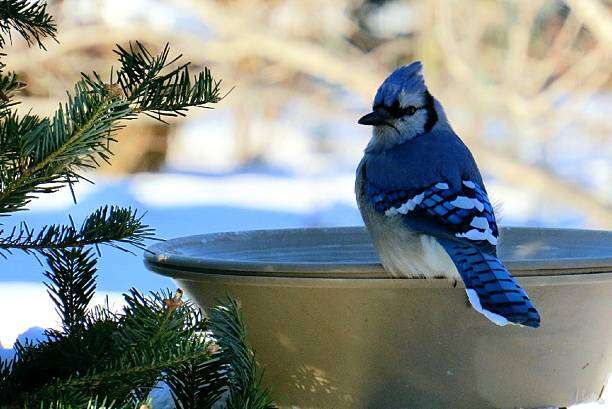
Conclusion: The Educational Power of Bird Baths
A bird bath , as part of a family garden, offers value far beyond its ornamental and decorative aspects. It provides a real, tangible micro-ecological environment, allowing children to understand water cycles, energy flow, food chains, information transmission, and seasonal ecological rhythms through close observation. By observing birds’ daily behavior in the bird bath , children, more acutely than adults, capture fleeting moments of ecological cycles, gaining a powerful and intuitive ecological education experience. A well-planned bird bath , optimized plant layering, and clean water sources can transform a garden into a natural ecological classroom for children, allowing them to understand the essence of ecological cycles through play and observation.
FAQ
Why are children able to understand ecological cycles more quickly?
When observing, children pay attention to details and processes, and are more likely than adults to capture subtle changes, thus intuitively understanding each link in the ecological cycle.
How can bird bathing help children understand the water cycle and food chain?
By observing birds drinking, preening, foraging, and seed dispersal, children can directly see how water resources are used and how the food chain works.
How can we balance ecological education and bird safety when
setting up a bird bath ? Choose a semi-open location, keep the bird bath clean, and create a layered plant environment. At the same time, ensure that the birds have an open view and smooth escape routes, allowing children to observe the birds’ natural behavior without disturbing them.
Related Posts
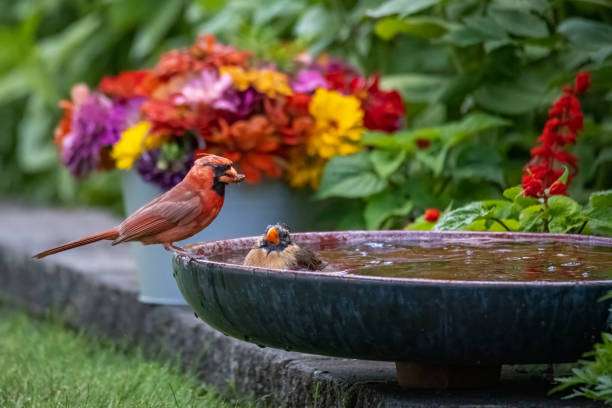
3 hidden values of bird bath observation with children: Children understand things faster than adults.
-
Posted by
 Marilyn Everett