6 fatal mistakes that always lead to no bird baths : The problem is often not with the birds.
Common Misconceptions About Bird Baths Being Quiet
Many garden owners complain that their carefully selected and arranged bird baths remain unused, even suspecting that the birds don’t like them or that there are no birds nearby. In reality, the problem often lies not with the birds, but with the arrangement, location, surrounding environment, and water management of the bird bath . Birds are extremely sensitive to their environment; they decide whether to approach water sources based on safety, visibility, concealment, and food chain considerations. A single overlooked detail can turn a bird bath from an ecological resource into mere decoration.
A deserted bird bath not only robs a garden of its ecological vitality but also wastes the owner’s time and energy on its arrangement and maintenance. Understanding the behavioral psychology and ecological needs of birds is key to solving the problem of “no one coming.” By scientifically planning the layout, choosing the right material and depth for the water basin, controlling water quality, and optimizing the surrounding vegetation, the frequency of bird use can be significantly increased.
Error 1: Improper placement
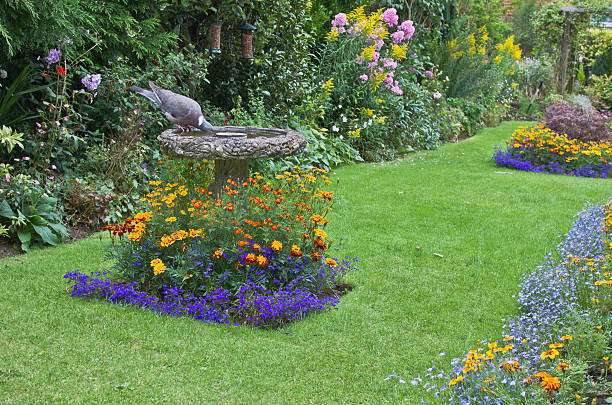
Many gardeners place bird baths haphazardly in shady corners, near sidewalks, or next to fences, assuming that water birds will come wherever they are. In reality, birds are very sensitive to their sense of security when choosing a water source. If the area around the bird bath lacks a high vantage point or adequate cover, birds will feel exposed and threatened, and thus will not dare to approach.
The scientific approach is to choose a semi-open area with tall vegetation providing long-range cover, mid-level vegetation forming an access path, and ensuring openness at the lower levels so that birds have a clear view and escape route when using the water source. Location selection not only affects the birds’ psychological safety but also determines the frequency of use of the water bowl and the length of time they stay.
Error 2: The water basin design does not meet the needs of birds.
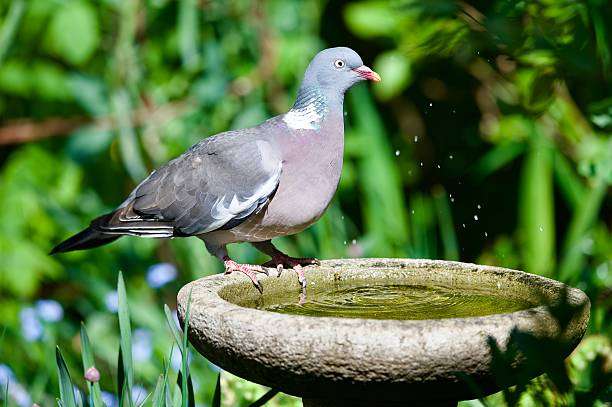
Many people assume that birds will use water as long as it’s available. However, the depth, size, material, and edge design of the water bowl directly affect whether birds will use it. A bowl that is too shallow or too small makes it difficult for large birds to stand, while a bowl that is too deep makes small birds feel threatened. Slippery or sharp edges increase the risk of injury. A material that is too reflective or a color that is too bright may also scare birds away.
Bird bath design needs to take into account the needs of different birds: light to medium depth, gentle edges, moderately rough surface, natural color, and harmony with the surrounding environment. This can increase the comfort and sense of security of birds when they stay, and make the garden ecosystem more active.
Mistake 3: Inadequate water quality management
Birds are extremely sensitive to water quality; dirty, algae-covered, or smelly water bowls will deter them. Even clear water will reduce their willingness to use it if it hasn’t been changed for a long time or is too hot. Many owners believe that birds are naturally “resistant to dirt” and neglect the importance of regularly cleaning and changing the water in their bird baths, resulting in birds going to waste for extended periods.
The scientific approach is to keep the water basin clean, change the water every one or two days, and in the high temperatures of summer, change the water daily, while also cleaning away sediment and impurities from the bottom. A water basin with moderately warm, clear, and odorless water is most attractive to birds for resting and preening, while also reducing mosquito breeding and microbial growth, ensuring ecological safety.
Mistake 4: Lack of safe cover in the surrounding environment
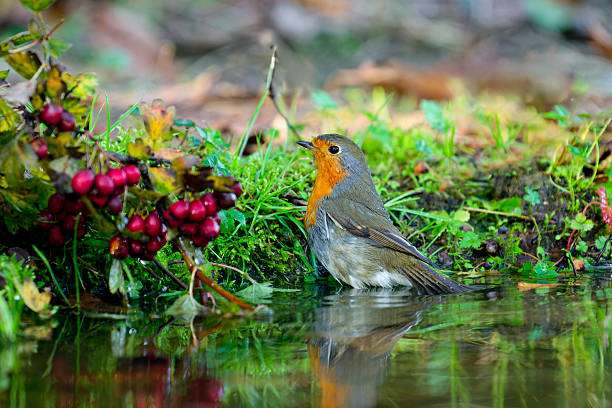
Birds are extremely reliant on their sense of security when near water. If there are no tall trees or shrubs to provide cover around a bird bath , or if the view is too open, birds will avoid it for fear of predators. Close human activity, frequent pet passages, and excessive noise will also reduce the frequency of bird bathing.
The layout strategy should consider providing cover while maintaining an open field of vision. Tall plants are used for long-range observation, mid-level shrubs form access channels, and low plants regulate the microenvironment. This layered layout allows birds to have a clear escape route and safety before entering the water basin, increasing the likelihood of them stopping and using it.
Mistake 5: Ignoring seasonal and microclimate influences
bird bathing is affected by seasonal changes, temperature, wind direction, sunlight, and precipitation. High summer temperatures increase the frequency of bird bathing, but if the water basin is exposed to strong sunlight or the water temperature is too high, the birds will reduce their willingness to use it. In winter, the water basin freezes, preventing birds from drinking and bathing, so they will avoid it. Strong winds or exposed locations also make birds feel unsafe.
bird baths before seasonal changes , adding shade or wind protection, ensuring suitable water temperatures in summer, and preventing water freezing in winter. Through dynamic management, bird baths can remain attractive in different seasons, increasing bird utilization.
Mistake Six: Lack of Environmental Interaction and Ecological Attraction
An isolated bird bath lacks appeal; even with excellent water quality and a safe location, it may go unnoticed. Birds’ interests are influenced by the overall environment, including food resources, plant diversity, and habitat and shelter. A lack of fruit trees, shrubs, herbs, or small insects and natural habitats will reduce birds’ willingness to visit.
The optimization method involves arranging diverse plants around the water basin to create a natural foraging and sheltering environment, while also providing a safe habitat. Through ecological interaction, the water basin is no longer isolated but becomes a core node in the garden’s micro-ecosystem, attracting frequent visits from various birds and achieving true ecological revitalization.
Comprehensive Strategy: Revitalizing Bird Bath
The key to solving the problem of deserted birds lies in a holistic approach, rather than isolated adjustments. Location, design, water quality, surrounding environment, seasonal management, and ecological interaction are six interconnected aspects. Scientifically placed water basins at appropriate heights with secure edges, clean and transparent water, rich vegetation, providing safe cover, and considering seasonal changes, coupled with support from food and habitat, can significantly increase bird usage frequency.
Long-term observation and adjustment are key. Garden owners can record bird usage frequency and behavior to identify potential problems and optimize the layout. Through systematic management and continuous optimization, bird baths can transform from neglected areas into ecologically active nodes, not only enhancing the garden’s aesthetics but also strengthening its ecological functions and supporting bird health and nature education value.
Conclusion: The problem isn’t with the birds, but with the environment.
Bird baths that remain unused are usually not the birds’ fault, but rather a lack of proper placement, design, water quality, environment, and ecological appeal. Understanding bird behavior, psychology, and ecological needs, and scientifically adjusting the location, design, surrounding environment, and seasonal management of the water basin, are key to revitalizing bird bath . Garden owners only need to focus on the overall layout and microenvironment optimization; birds will naturally flock there, the ecosystem will become more active, and the garden will truly become a vibrant natural classroom.
FAQ
bird baths that no one comes for a long time?
No, the problem often lies in the environment and setup, including location, privacy, water quality, vegetation layering, and ecological appeal, rather than the birds themselves.
How to adjust the location and environment to attract birds?
Choose a semi-open and safe area with tall, medium and low vegetation to provide cover and activity channels, while also considering visibility, escape routes and seasonal changes.
What are the key points of water basin design and water quality management?
The water basin should be of moderate depth, with gentle edges and a natural color. The water should be kept clean and transparent. Change the water daily during the hot summer months and prevent freezing in the winter to reduce odors and microbial growth.
Related Posts
2 truths about how bird baths bring your garden to life: Why birds gather there?
-
Posted by
 Marilyn Everett