2 truths about how bird baths bring your garden to life: Why birds gather there?
The Hidden Boundary Between a “Living” and a “Living” Garden
Many people have similar experiences. A garden, despite being filled with flowers, trees, and even meticulously designed landscaping, always feels lifeless.
The plants grow quietly, the leaves rustle in the wind, but there’s no sense of interaction with life.
In contrast, some seemingly ordinary courtyards always attract birds, their calls rising and falling, as if the entire space has been brought to life.
This difference doesn’t entirely depend on the number of plants or the design style, but rather on a more fundamental yet often overlooked factor: whether birds are willing to actively gather there determines whether a garden truly becomes an ecosystem, and not just a visually decorative space.
Among the many factors influencing bird gatherings, the seemingly insignificant bird bath is often the most crucial trigger.
It not only provides a water source but also subtly alters birds’ perception and behavioral patterns of the garden, transforming the entire garden from a static landscape into a dynamic ecological field.
Truth #1: Water is the first signal birds use when choosing a habitat.
In their natural environment, birds choose their activity areas primarily based on resource stability, not flower color or tree shape.
For birds, whether an area is worth staying in long-term depends on whether it can provide consistently predictable living conditions.
Water is one of the most basic needs of all living things. Unlike food, water cannot be stored in the body for long periods and must be replenished frequently.
In natural ecosystems, water bodies often determine the boundaries of biological distribution. Wetlands, riverbanks, and the areas around lakes are usually the areas with the highest bird density, and this pattern holds true at the urban and garden scales as well.
A bird bath in a garden sends a very clear signal to birds: a stable and safe water source exists here.
This signal is extremely attractive to birds that are constantly moving around the city in search of resources.
When a bird first discovers a safe and usable water source, it incorporates that location into its daily activity path through spatial memory.
Birds possess excellent spatial navigation abilities, and once a location is marked as a reliable resource point, they will repeatedly visit it.
These repeated visits gradually attract more individuals to follow, forming local clusters.
In behavioral ecology, this phenomenon is known as the resource center effect.
A stable resource point gradually becomes the center of biological activity, thereby altering the distribution structure of surrounding organisms.
Bird baths are precisely such a low-cost but high-impact resource center.
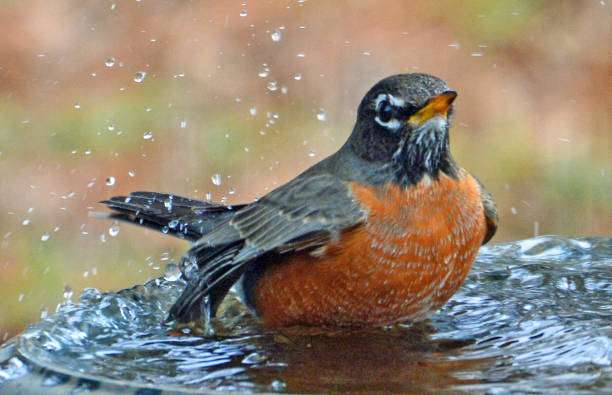
Water attracts not only individuals, but also social behaviors.
Birds are not entirely solitary creatures. Many bird species exhibit distinct social behaviors, assessing environmental safety and resource value by observing the behavior of their peers.
When one bird drinks or bathes in a garden, other birds often detect this behavior through visual and auditory cues.
Birds are highly sensitive to the behavior of their own kind. Seeing other birds safely using a resource site significantly lowers their own alertness threshold.
This social learning mechanism amplifies the appeal of bird bathing. What begins as individual exploration then transforms into group gatherings.
This gathering of birds, in turn, further enhances the ecological vitality of the garden.
More birds mean more calls, flight paths, and interactions. The garden is no longer just a private space for humans, but a miniature ecological field shared by multiple species.
How water sources alter bird risk assessment for gardens
Birds conduct complex risk assessments when choosing resting locations.
Factors such as open space, field of vision, escape routes, and frequency of human disturbance all influence their decisions.
The presence of water can alter this assessment process.
A garden with only plants and lacking water is merely a potential foraging area for birds, not a resting place.
Birds may briefly stop to look for insects or seeds, but they won’t incorporate them into their long-term activity range.
Conversely, the presence of water transforms a garden from a temporary foraging spot into a daily activity node.
This upgrade means that birds will stay longer, increasing their frequency of observation by humans and giving the garden a continuous sense of life.
In other words, bird baths change how birds perceive the garden, transforming it from a “passing-through” space into a “living space.”
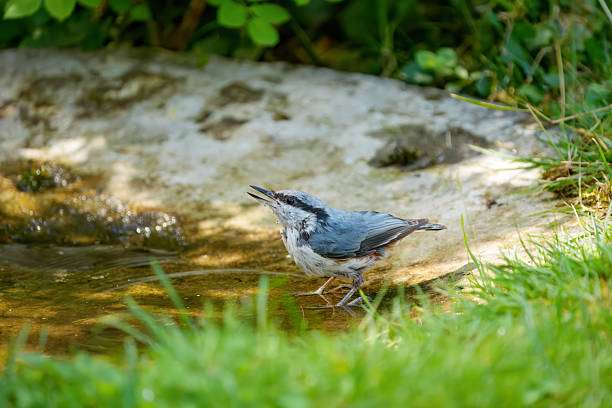
Truth #2: The bird bath triggered a chain reaction in the garden’s ecosystem.
The second truth about birds gathering is that bird bathing not only affects the birds themselves, but also triggers a series of ecological chain reactions, gradually activating the entire garden ecosystem.
When birds begin to frequently visit a garden, they bring not only song and visual movement, but also ecological functions.
Birds are important insect predators and seed dispersers. Their presence alters the species interaction network within the garden.
The regulation of insect populations is the most obvious change.
Many birds rely on insects as their primary food source. When bird populations increase, pest populations are naturally controlled.
This control does not completely eliminate insects, but rather maintains them at a level of ecological balance, allowing plants to grow healthily without being subjected to large-scale infestations.
Meanwhile, birds disperse seeds during their activities.
They carry plant seeds in their droppings or feathers, spreading the plants to different corners of the garden.
In the long run, this natural dispersal increases plant diversity, giving the garden a more natural community structure.
The bird bath actually initiates a complex ecological cycle.
Water attracts birds, birds regulate insects and plants, and plants provide more habitat and food, further attracting birds.
This positive feedback loop transforms the garden from a static landscape into a self-organizing ecosystem.
Why do gardens “look more vibrant” when birds gather?
Human perception of “life” comes not only from sight but also from hearing and behavioral dynamics.
Birdsong is one of the most important soundscape elements in the natural environment.
When birds gather, the sound structure of a garden changes. The calls at dawn, the sounds of birds fighting for food, and the flapping of wings in flight—these sounds constitute a complex ecological soundscape.
Studies show that natural soundscapes have a significant positive impact on human mental health.
Birdsong is considered an important factor in reducing stress and enhancing well-being.
When birds gather in a garden, human perception of space shifts from the “artificial environment” to the “natural environment,” thereby creating a stronger emotional connection.
In addition, the dynamic behavior of birds is highly entertaining.
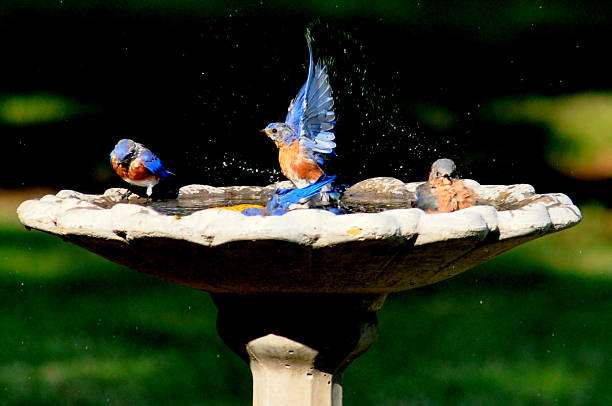
The splashing water when they bathe, their interactions when vying for position, and their busy flights during the breeding season all make the garden a constantly changing stage, rather than a static arrangement.
Bird baths bring gardens to life is not only because of the increased number of birds, but also because they introduce time and behavioral dimensions, making the space dynamic and observable.
The bird bath and the ecological structure of the garden
Birds are extremely sensitive to spatial layout.
The location of a bird bath affects the frequency of bird use and the formation of the garden’s ecological structure.
Placing it in an open area with shelter, providing both a view and an escape route, is usually the most popular with birds.
When birds frequently gather around the bird bath, this area gradually becomes the center of the garden’s ecological activities.
Plant arrangement, insect activity, and human observation all revolve around this center.
The bird bath thus becomes a key node in the garden’s ecological spatial structure.
This nodal structure transforms the garden from a homogeneous space into an ecosystem with functional zones.
The central area experiences high activity, while the peripheral areas are less disturbed, allowing different species to form micro-niches in different zones.
This complexity is the core characteristic of a “living” ecosystem.
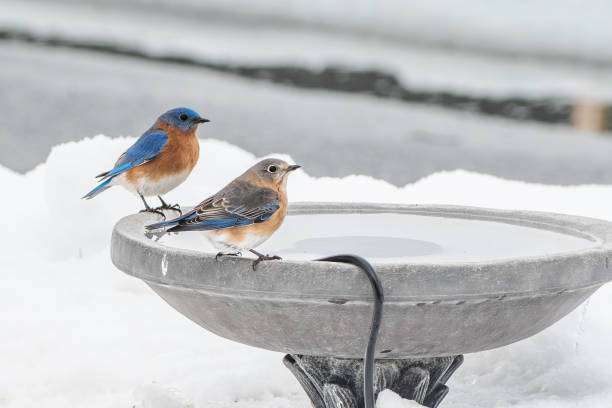
Bird bathing and human behavior
Bird populations not only alter ecosystems but also change human behavior.
Many gardeners, after observing birdwatching, adjust their plant choices, reduce chemical pesticide use, and increase natural elements.
This behavioral feedback further enhances eco-friendliness.
Bird baths thus become a medium for interaction between humans and nature.
They attract not only birds but also human attention, transforming gardens from spaces for personal aesthetic appreciation into spaces for ecological practice.
As humans begin to pay attention to bird behavior, the management logic of gardens will shift from pure decoration to ecological maintenance.
This transformation marks a crucial starting point for the coexistence of cities and nature.
Why do birds appear voluntarily rather than passively?
Many people mistakenly believe that birds appearing in gardens are accidental events, but in reality, it is the result of active selection.
Birds continuously assess environmental resources through flight exploration, path memorization, and social learning.
When a garden provides a stable water source and creates a positive ecological feedback loop, it will be incorporated into the bird activity network.
This inclusion is not a one-off event, but a continuous optimization process.
Birds compare the risks and benefits of different resource sites, gradually forming preferences.
Bird baths give gardens a competitive advantage in bird decision-making by reducing the cost of finding water sources and improving resource predictability.
From this perspective, bird baths are a core feature of a garden’s ecological competitiveness.
They elevate a garden from an ordinary green space into a high-value habitat.
Overlooked details determine the hierarchy of the ecosystem.
Many people are willing to invest heavily in garden landscaping, yet overlook the role of such infrastructure.
Bird baths are extremely low-cost but have a significant ecological impact.
They represent an ecological design philosophy that triggers ecosystem-level change by meeting key physiological needs.
True ecological design is not about complex technology, but about understanding the needs of organisms and responding precisely.
Bird baths are a prime example of this design philosophy. Simple, yet they transform system behavior.
Conclusion: The life of a garden begins with a pot of water.
Bird baths bring gardens to life because they send a stable resource signal to birds and trigger a chain reaction in the ecosystem.
Birds gather not because the garden is beautiful, but because the garden becomes habitable.
When water becomes part of a garden, the garden is no longer just a private space for humans, but an ecological node shared by multiple species.
The gathering of life begins with a basin of water, and the complexity of ecology gradually grows from these gatherings.
FAQ
bird baths really cause significant changes in garden ecology?
In the long run, a stable water source will significantly increase the frequency of bird visits, thereby triggering insect regulation, seed dispersal and soundscape changes, increasing the complexity of garden ecology.
Will bird gatherings damage garden plants?
Most yard birds have a limited impact on plants; in fact, they often improve plant health by preying on pests.
Moderate bird activity is usually a sign of ecological balance.
A bird bath still make sense if the garden is small?
Even in a small balcony or miniature courtyard, a bird bath can become a node for bird activity, and ecological feedback can still be generated on a small scale, only the number of species and the scale of interaction are smaller.
Related Posts
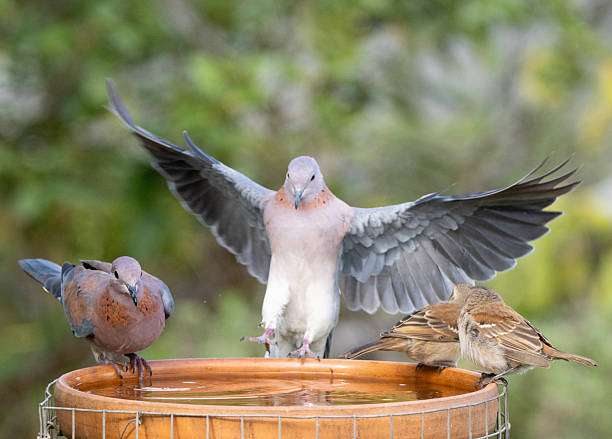
6 fatal mistakes that always lead to no bird baths : The problem is often not with the birds.
-
Posted by
 Marilyn Everett
4 things to keep in mind when bird bathing and living with pets: Ignoring just one thing will scare the birds away.
-
Posted by
Marilyn Everett