Bird baths: An underestimated value – how they quietly improve urban bird survival rates
Neglected Urban Corners: Bird Survival Is Not Romantic
In urban contexts, people often view birds through a romantic lens. The morning calls, the silhouettes against the treetops, the occasional flight path gliding between skyscrapers—these images create the illusion that the city is an environment birds have “already adapted” to.
But reality is far harsher than imagined. For most wild birds, the city is not an extension of nature, but a labyrinth of survival forcibly inserted into their environment.
High-density buildings have disrupted traditional migration routes, glass curtain walls have become invisible death traps, hard surfaces have replaced soil, and rainwater is rapidly drained into pipe networks.
Among these changes, the most easily overlooked, yet most deadly, is the disappearance of water resources. Cities do not lack water, but they lack open water sources that can be safely and sustainably used by birds.
It is against this backdrop that a seemingly insignificant object begins to reveal its true ecological significance. The bird bath, often regarded as a garden decoration or a “niche hobby for bird lovers,” actually plays a role in the urban ecosystem that goes far beyond its appearance.
Water is scarcer than food in cities.
The public’s intuition about bird conservation usually focuses on “feeding.” Bird food, breadcrumbs, and grain-based feeds seem direct and effective, but they often overlook a more fundamental issue.
For birds, the availability of water is often more crucial than food.
In their natural environment, birds replenish their moisture through dew, streams, wetlands, and rainwater, and maintain their ability to fly and stay warm by preening their feathers.
But in cities, these sources are systematically reduced. Dew is difficult to retain on concrete surfaces, rainwater is quickly drained away, and open water bodies are either fenced off or have unsuitable water quality.
More importantly, many water sources in cities are not safe for birds. These include:
- Deep pools with steep edges that make it impossible for birds to stand;
- Fountains with unpredictable water flows;
- Air conditioner condensate drains that are often hidden and difficult to locate.
These factors combine to result in birds spending more time and energy searching for usable water sources.
This extra expenditure directly impacts survival rates. Dehydration reduces birds’ metabolic efficiency, making them more susceptible to disease and impairing their alertness and flight ability.
In high-risk urban environments, this impairment often translates to death.

a bird bath is more than just “bathing”.
Judging from its name, a bird bath might seem like just a place for birds to preen their feathers. But from a behavioral ecology perspective, its function goes far beyond that.
The functions of a bird bath include:
- Stable and predictable water resource: Stability is extremely important in urban environments. Birds repeatedly visit reliable locations through spatial memory, and once they confirm the presence of a safe water source in an area, they can reduce the exploration costs of their daily activities. This saved energy is directly used for foraging, breeding, and guarding.
- Maintenance of physiological functions: Cleaning feathers is not a “dispensable” behavior. Bird feathers have a complex structure, relying on tiny hook-like structures to maintain an air layer, thereby achieving insulation and flight efficiency. If feathers are damaged by oil, dust, or parasites, birds need to expend more energy to fly, and may even lose their ability to regulate body temperature in low or high temperatures. Regular bathing is crucial for this maintenance.
- Brief “recovery window”: A deeper value lies in the fact that bird baths provide birds with a temporary reprieve. In cities, truly safe zones are virtually nonexistent. A well-located and designed bird bath allows birds to temporarily lower their alertness levels and perform necessary physical maintenance. This psychological and physiological recovery is crucial for long-term survival.
How tiny facilities can alter an individual’s probability of survival
From the perspective of an individual bird, the changes brought about by bird bathing are concrete and direct. For a sparrow or robin, finding a stable water source during the hot summer means that it does not need to fly long distances to find wetlands during the hottest periods, thus reducing the risk of heatstroke and predation.
This effect is amplified during the breeding season. Adult birds need to frequently travel between the nest and foraging area, and any resource point that reduces the travel distance will significantly increase the success rate of raising chicks.
Water sources close to the nesting area mean that adults can more efficiently regulate their body temperature and clean their feathers, thereby maintaining the physical condition required to care for their chicks.
Studies show that in urban areas with stable shallow water facilities, the annual survival rates of adults and chicks of certain small bird species have improved.
This improvement is not due to a population explosion, but rather to reduced risk at the individual level. When the survival probability of individual individuals increases, the population becomes more resilient on long-term scales.
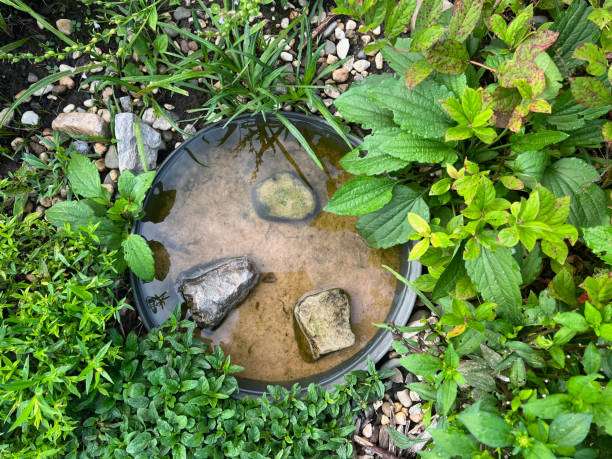
bird bathing affect the structure of urban bird communities?
From a broader perspective, the existence of bird baths gradually alters the bird composition of a region. Not all birds can adapt to urban life; those that truly survive are the species that can find stable resources in fragmented environments.
Bird bathing provides additional support for some species that were previously marginalized, preventing them from being completely marginalized in competition. This support helps maintain the diversity of urban bird communities, which in turn is the foundation of ecosystem stability.
When birds of different sizes and ecological niches can share a safe water source, predator pressure is distributed, and disease transmission patterns change.
A healthy community structure does not necessarily mean increased numbers, but rather a higher tolerance for disturbances within the system.
“Low-key infrastructure” in urban ecology
If we compare a city to a complex system, a bird bath is more like an informal infrastructure. It’s not as conspicuous as a park or greenway, but it plays a role at key points.
Precisely because of its dispersed and low-key nature, it can compensate for the shortcomings of macro-planning at the micro-scale of the city.
Large-scale urban ecological projects are often time-consuming and costly, while small-scale interventions like bird baths can be implemented by individuals and communities in a short period of time.
These interventions are distributed on balconies, in courtyards, and in community corners, forming a dense support network. For birds, the significance of this network lies in its “accessibility,” not its scale.
More importantly, these facilities lower the barrier for ordinary residents to participate in ecological conservation.
When conservation actions become concrete and visible, people are more likely to realize that the city is not isolated from nature, but a shared space that can be restored and optimized.
Reasons for being underestimated: Unseen effects
One reason bird baths have long been underestimated is that their effects are not easily quantifiable. You’re unlikely to see a significant increase in bird populations in the short term simply by placing a bird bath.
Instead, its effect lies in preventing deaths that should have occurred but didn’t.
In ecology, this type of effect is known as latent benefit. The flight that didn’t crash into the glass, the summer that didn’t see birds abandon their chicks due to dehydration—these events themselves may not be recorded, but they cumulatively change the fate of urban birds over time.
Humans tend to assign value to grand, visual projects, while overlooking this kind of small, ongoing support.
The value of a bird bath lies precisely in its tranquility and continuity.
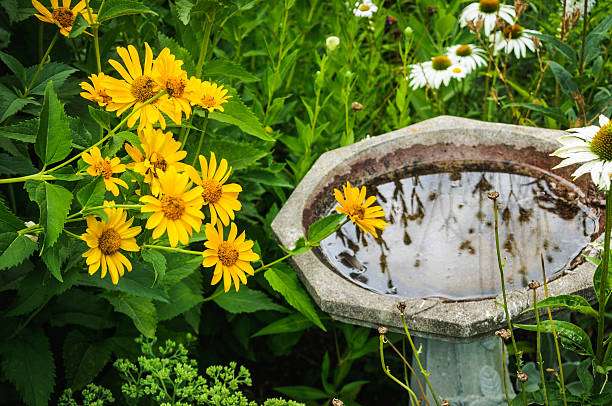
When cities begin to understand the details of “coexistence”
A truly mature view of urban ecology is not simply about preserving a few green spaces, but about understanding the specific conditions required for different species to survive in the city.
Bird baths remind us that coexistence is not always a grand slogan, but is composed of countless details.
These seemingly insignificant factors determine whether a city is merely a human habitat or a space shared by multiple species:
- A stable water source;
- A safe place to stay;
- And a window of time to recover.
When we re-examine the meaning of bird baths, we are actually re-examining the design logic of the city itself.
Whether it allows life to linger, whether it leaves room for the vulnerable—the answers to these questions are often hidden in the most inconspicuous corners.
In conclusion: What truly transforms the ecosystem is often not grand engineering projects.
Bird baths don’t return cities to their original, natural state, but they subtly increase the survival rate of birds within the existing structure.
This increase is unassuming, yet real. It doesn’t rely on macro-planning, but rather on continuous, decentralized goodwill and understanding.
As more and more of these small facilities appear in cities, ecological improvement is no longer just a distant ideal, but a daily practice.
Perhaps it is these underestimated details that constitute the most important underlying ecological logic for the future of cities.
FAQ
a bird bath really more important than feeding birdseed?
In many urban environments, a stable and safe water source is just as important to birds as food, especially during high temperatures or the breeding season. Water resources directly affect their physiological state and survival rate.
Will placing
bird baths in the city attract pests or cause hygiene problems?
If the water is changed regularly and the basin is kept clean, bird baths are not more likely to cause hygiene problems than other outdoor facilities. On the contrary, they can reduce the risk of birds using unsafe water sources.
a single bird bath really have an impact on the overall ecosystem?
The effect of a single bird bath is limited, but when they form a dispersed network in the city, they can improve the stability of individual birds and populations on a long-term scale, which is one of the key pathways to improve the urban ecosystem.
Related Posts
5 key relationships between bird baths and feather care: Not washing feathers with water equals chronic damage.
-
Posted by
 Marilyn Everett
Bird Bath: 4 Cooling Mechanisms: How Birds Survive Heatwaves
-
Posted by
Marilyn Everett
3 key functions of a bird bath: How a simple design can save more birds
-
Posted by
Marilyn Everett