High temperatures are not a minor problem for birds that they can simply “tough it out.”
During the hot summer months, people often see bird bath still flying in the air and singing in the trees, leading to the intuitive conclusion that birds seem to have a strong tolerance for high temperatures.
However, this conclusion overlooks the fact that birds do not have a heat dissipation system as advanced as humans. They cannot regulate their body temperature by sweating. For them, high temperatures are not just a nuisance, but a true survival crisis.
Birds naturally have a higher body temperature than humans, with most small birds having a normal body temperature of around 40 degrees Celsius.
When the ambient temperature approaches this value, the temperature difference between the inside and outside of the body rapidly decreases, and heat can hardly be dissipated naturally. Once the body temperature becomes out of control, birds will experience organ failure in a very short time.
In natural environments, this risk can be mitigated by canopy shading, wetland evaporation, and microclimate regulation.
However, in urban and backyard environments, high temperatures are amplified. Concrete and metal structures retain heat, air circulation is restricted, and nighttime cooling is slow, exposing birds to prolonged heat stress.
It is against this backdrop that the seemingly ordinary bird bath has become a vital lifeline for birds to survive the heat crisis. It is not merely a water container, but participates in the bird’s thermoregulation process through multiple mechanisms.
What causes birds’ cooling difficulties in high-temperature environments?
To understand the cooling benefits of bird bathing, we must first understand why birds are so vulnerable to danger in high temperatures. The physical structure of birds inherently limits their ability to dissipate heat.
Feathers are essential equipment for birds’ survival, providing insulation, waterproofing, and aiding in flight.
However, in high-temperature environments, this structure ironically becomes a barrier to heat dissipation. Feathers cover the body, reducing heat exchange and making it difficult for birds to quickly release accumulated internal heat.
Furthermore, birds have extremely high metabolic rates. Flight is an energy-intensive activity, and even when at rest, birds have a significantly higher basal metabolic rate than mammals of similar size. This means they continuously generate heat but lack efficient ways to dissipate it.
In hot weather, birds often have to reduce their activity and pant to lose some heat through respiration and evaporation.
However, this method is not very efficient and leads to rapid loss of body water. When dehydration and high temperatures occur simultaneously, the risk increases exponentially.
Bird bathing provides birds with a crucial external means of regulation within this series of physiological limitations.
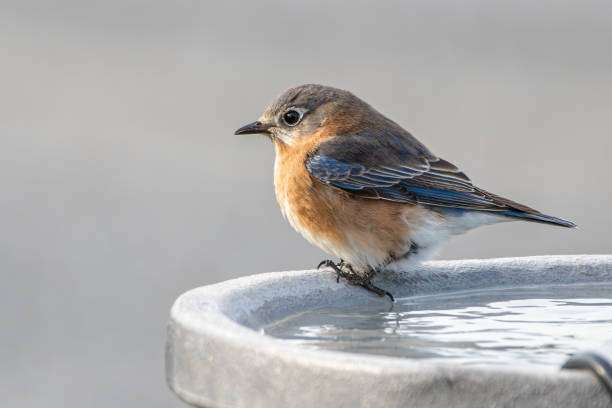
The first cooling mechanism: evaporative cooling caused by soaking feathers in water.
The most intuitive and basic cooling mechanism of bird bathing is evaporative cooling through water immersion in the feathers.
When birds bathe in shallow water, water adheres to the surface of their feathers and between the feather shafts. As the water evaporates, heat is carried away, thus lowering their body surface temperature.
This evaporative cooling is far more efficient than simply dissipating heat through respiration.
This is because feathers cover a large area, resulting in even moisture distribution, allowing the evaporation process to continue for a longer period. Even after a bird has left the water, the moisture remaining in its feathers continues to evaporate, providing a sustained cooling effect.
This mechanism is especially important in high-temperature environments. It allows birds to rapidly lower their body surface temperature in a short period of time, giving them physiological buffer time for subsequent foraging, flight, or brooding activities.
More importantly, this cooling method does not require birds to expend a lot of extra energy. Compared to frequent panting or prolonged mouth breathing, bathing is a relatively efficient and low-burden regulation method.
Why is the structure of feathers so effective at cooling down?
Bird feathers are not smooth surfaces, but rather complex structures composed of rachis, barbs, and barbules. This structure traps air to form an insulating layer when dry, and increases the surface area for moisture adhesion when wet.
When feathers get wet, the space that originally held air is replaced by water, temporarily reducing the feathers’ insulating properties.
This reduction is actually an advantage in high-temperature environments because it accelerates the transfer of heat from the inside of the feathers to the outside.
Therefore, the bathing opportunity provided by bird baths actually allows birds to temporarily “shut down” the heat-insulating function of their feathers and instead enhance heat dissipation efficiency.
This switchable function is an important strategy for birds to adapt to their environment, and bird baths are the external conditions that trigger this strategy.
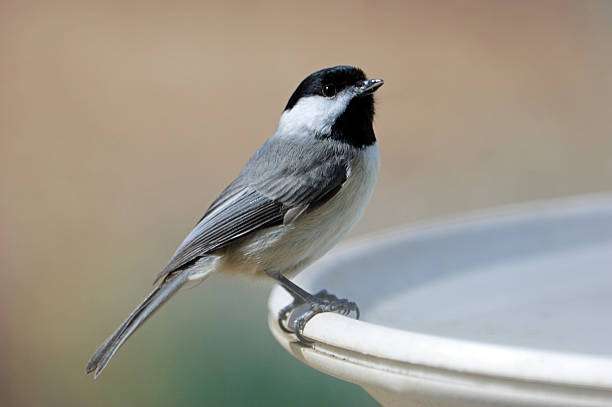
The second cooling mechanism: hydration to maintain the body’s temperature regulation ability.
High temperatures are not just a matter of temperature, but also a matter of hydration.
Birds in hot environments need to dissipate heat through respiration and evaporation, a process that rapidly depletes their body water. If water is not replenished in time, birds can quickly become dehydrated.
Dehydration directly weakens a bird’s ability to regulate its body temperature.
Reduced blood circulation efficiency, decreased organ heat dissipation, and reduced respiratory evaporation create a vicious cycle. In this state, even a slight drop in ambient temperature makes it difficult for birds to return to their normal physiological state.
Bird baths allows birds to drink frequently during hot periods, maintaining their water and electrolyte balance.
Stable hydration is essential for birds to continue using other cooling methods.
This is especially crucial in urban environments. Natural water sources are scarce, and rainwater drains away quickly, often forcing birds to fly long distances in search of water.
Long-distance flights in high temperatures are inherently high-risk behaviors. Bird bathing significantly reduces this risk by shortening the distance to refill water.
The Hidden Link Between Moisture and Cooling
Water not only replenishes bodily fluids but also directly participates in body temperature regulation.
When birds have sufficient water in their bodies, the blood can more effectively transport heat from the core organs to the body surface. Water evaporation from the respiratory system also becomes more stable, thus maintaining a constant body temperature.
Conversely, when birds are dehydrated, they are forced to reduce evaporative cooling to prevent further dehydration.
This “water-conserving priority” physiological response causes their body temperature to rise rapidly, increasing the risk of heatstroke.
Bird baths allows birds to avoid the dangerous choice between hydration and heat dissipation. They can maintain adequate hydration in high-temperature environments, thus enabling them to continuously utilize multiple cooling mechanisms in tandem.
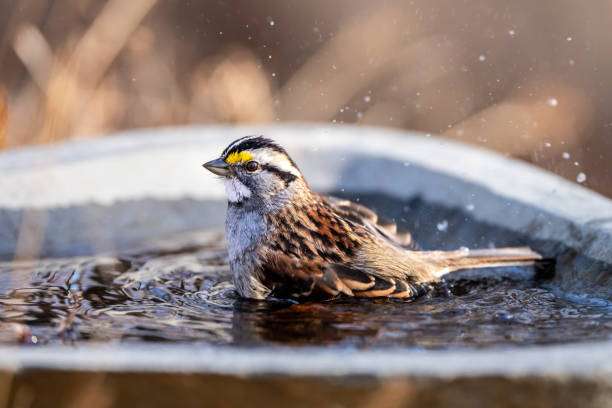
The third cooling mechanism: behavioral cooling and adjustment of activity rhythm.
Bird bathing not only helps birds cool down physiologically, but it also alters their behavioral patterns.
In high-temperature environments, birds will actively adjust their activity rhythms, trying to be active in the early morning and evening to avoid the midday heat.
When bird bathing is available, birds can quickly move to water sources to cool down and recover after a brief period of activity during hot weather.
This predictable cooling period allows birds to maintain necessary activities for a longer window of time without having to completely avoid the high temperatures.
The significance of this behavioral adjustment lies in reducing the time that birds are forced to stop foraging or raising their young due to high temperatures.
Especially during the breeding season, the young birds’ need for food does not decrease due to the weather. If adult birds are unable to forage due to high temperatures, it will directly affect the survival rate of the young birds.
Bird baths provide a rapid cooling opportunity, enabling birds to maintain their basic life rhythms under high temperatures, thereby reducing the risk of breeding failure caused by heat waves.
How to reduce overall heat stress level at cooling nodes
In environments with sustained high temperatures, birds face not a one-time heat shock, but rather prolonged heat stress.
Long-term exposure to high temperatures weakens their immune system, making them more susceptible to disease.
Bird baths allow birds to periodically lower their body temperature, interrupting the continuous heat stress.
This intermittent recovery is crucial for long-term health. It doesn’t necessarily keep birds cold at all times, but rather prevents their body temperature from remaining in a dangerously high range.
This mechanism is similar to humans briefly resting in an air-conditioned environment after being in high temperatures. Even if it’s not continuous cooling, it can significantly reduce health risks.
The fourth cooling mechanism: reducing heat load through cleaning.
There is a direct relationship between feather cleanliness and cooling.
Dirty feathers not only affect flight but also heat dissipation efficiency. Dust, oil, and parasites can disrupt feather alignment, obstruct airflow, and increase localized heat buildup.
Bird baths provide birds with a regular opportunity to clean their feathers.
Cleaned feathers are more orderly arranged, airflow is better, and body heat is dissipated more easily. This indirect cooling effect is especially important in environments with sustained high temperatures.
In addition, parasites can irritate birds, causing them to scratch and shake their feathers frequently, increasing unnecessary energy expenditure and heat production.
By bathing to reduce the parasite burden, birds can lower their extra heat source and thus more effectively regulate their body temperature.
Why are cleaning and cooling inseparable?
Many people view bathing as a hygienic act, but overlook its role in thermoregulation.
For birds, cleanliness is not a comfort requirement, but a functional one. Clean feathers mean more efficient flight, more stable body temperature, and lower energy consumption.
In high-temperature environments, any factor that increases energy expenditure will be converted into extra heat. Bird bathing indirectly reduces the endogenous heat burden on birds by maintaining the functional integrity of their feathers.
In an era of frequent heat waves, the importance of bird baths is rising.
As global temperatures rise, extreme heat events are becoming more frequent.
For urban birds, this means that high temperatures are no longer an occasional challenge, but a constant source of stress.
In this context, bird baths are no longer just an added bonus, but are increasingly becoming basic life support facilities.
They provide birds with a comprehensive solution for coping with high temperatures through the synergistic effect of multiple cooling mechanisms.
A simple shallow water design conceals complex and sophisticated physiological and behavioral adaptation mechanisms. When bird baths exist, birds have more choices and greater resilience in survival.
Conclusion: A basin of water can sustain you through the entire summer.
Bird baths help birds survive high-temperature crises through four cooling mechanisms: feather evaporation cooling, stable hydration, behavioral rhythm regulation, and cleaning and weight reduction.
Their value lies not in scale, but in precisely addressing the real needs of birds in extreme environments.
As high temperatures become the norm, this seemingly simple facility is quietly taking on the role of protecting life. A basin of water may support not just the ecosystem of a garden, but the hope for survival throughout the entire summer.
FAQ
In hot weather, can bird baths really significantly reduce the risk of heatstroke in birds?
A stable water source can support multiple cooling mechanisms simultaneously, significantly reducing the risk of dehydration and heat stress, especially for small birds.
In extreme heat, do birds actually face increased risks from bathing?
As long as the water depth is suitable and the environment is safe, the evaporative cooling from bathing far outweighs the risks, making it a common and effective cooling strategy for birds.
If only drinking water is provided but bathing is not, will the effect be greatly reduced?
Drinking water is already very important for body temperature regulation, but shallow bathing can provide an additional evaporative cooling effect, and the combination of the two is the most effective.
Related Posts
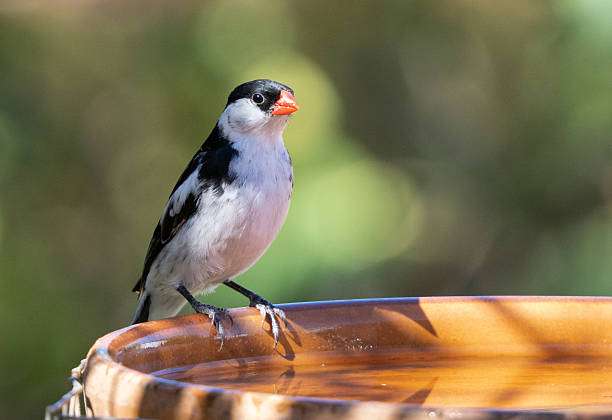
4 deadly problems with bird bathing in the summer heat happening in most gardens
-
Posted by
 Marilyn Everett

5 key relationships between bird baths and feather care: Not washing feathers with water equals chronic damage.
-
Posted by
Marilyn Everett

3 key functions of a bird bath: How a simple design can save more birds
-
Posted by
Marilyn Everett

Bird baths: An underestimated value – how they quietly improve urban bird survival rates
-
Posted by
Marilyn Everett