5 essential things to know when setting up a bird bath: It’s much more than just providing water for birds

I. The Severely Underestimated Bird Bath : From “Drinking Container” to Ecological Node
In most people’s minds, the purpose of a bird bath is extremely simplistic. It’s seen as a simple container placed in a corner of the garden to quench the birds’ thirst and occasionally allow them to preen their feathers—nothing more. Because this understanding is so superficial, the true value of bird baths in horticulture and ecological design has long been overlooked and even misunderstood.
In fact, a bird bath is not a “dispensable” garden decoration, but a functional facility that can actively intervene in the ecological cycle. Its role goes far beyond just providing water; it can even influence the health, behavior patterns, territorial selection, and the overall biodiversity structure of the garden.
When we re-examine the seemingly ordinary bird bath from a fresh perspective , we are surprised to find that it is actually a remarkably ingenious miniature ecological node. This small node, like a key hub in an invisible network, tightly connects multiple important aspects. It is not only intricately linked to water resources, providing birds with an indispensable source of water, but also fully considers their physiological needs, such as meeting their basic survival needs for bathing and drinking.
Simultaneously, it creates a sense of environmental security for birds, allowing them to move about in a relatively safe environment. Furthermore, climatic conditions also fall within the influence of this node; different climatic conditions affect the use and ecological function of bird baths. Moreover, human intervention methods, including how they are set up and maintained, also have a significant impact. Once this crucial node is designed properly and used correctly, its ecological effects are quite astonishing, often far exceeding initial expectations.
II. The physiological needs of birds determine the core value of bird bathing
To understand the true purpose of bird bathing , we must first discuss the physiological structure of birds themselves. Birds do not have sweat glands, so they cannot regulate their body temperature through sweating. In high-temperature environments, their feathers actually act as a barrier to heat accumulation, making cooling a crucial issue for their survival.
bird baths is an important medium for birds to regulate their body temperature. By standing in shallow water, flapping their wings, or wetting their abdominal feathers, birds can quickly dissipate heat from their body surface, thus avoiding the physiological stress caused by overheating. This behavior is not accidental, but a stable mechanism that birds have developed during evolution.
Meanwhile, feathers are not only an external structure for birds, but also essential tools for flight, waterproofing, insulation, and courtship displays. Once feathers are damaged or covered with grease and dust, their flight efficiency and insulation performance will significantly decrease. Bird baths provide birds with a safe and controlled cleaning environment, allowing them to regularly maintain their feather structure and extend their lifespan.
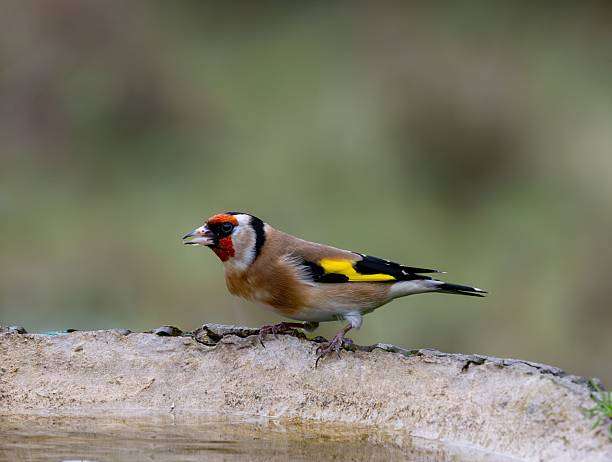
III. Behind cleaning feathers lies a whole set of survival strategies.
Many people see birds splashing in the water and mistakenly assume it’s just a simple bathing activity. However, this process involves a highly complex survival strategy. While cleaning their feathers, birds simultaneously preen them, spreading secreted oils evenly across the feather surface to enhance water resistance.
The depth of the water, the slope of the edges, and the material used for the surface of a bird bath all directly affect whether birds will use it. If the water is too deep, small birds may feel fear and be unable to move freely in such deep water. Conversely, if the surface is too smooth, birds will have less stability when standing or moving around, making them more prone to slipping.
This phenomenon clearly illustrates that a bird bath is not necessarily better the bigger or more luxurious it is; it needs to conform to the behavioral habits of birds to attract them to use it.
When a stable and easily accessible pond exists in a garden over a long period , birds gradually develop a sense of familiarity with the area, recognizing it as a safe territory because it provides safe drinking and bathing facilities. Once this awareness is established, it triggers a series of chain reactions. Birds will visit the garden more frequently and stay longer each time. They may even choose to nest and breed nearby, making it their long-term home and place for raising their offspring.
IV. The Hidden Relationship Between Bird Bathing and Birds’ Sense of Security
When choosing a water source, birds always prioritize safety. Water bodies in the natural environment often present predation risks, such as from cats, snakes, or other birds of prey. A well-designed pool can significantly reduce these risks.
An open field of vision, a suitable altitude, and a location away from hiding places all make it easier for birds to observe their surroundings. This sense of control and security is an advantage that natural bodies of water can hardly provide. Therefore, bird bathing is not a destruction of nature, but rather an ecological compensation optimized by humans.
In today’s urban and suburban environments, with the continuous advancement of urbanization and the ongoing impact of human activities, natural water resources are facing a severe and increasingly severe situation of depletion. At the same time, to meet the demands of urban construction and transportation, large amounts of land have been paved, resulting in a continuous increase in the area of paved surfaces.
Under these circumstances, whenever it rains, rainwater cannot slowly infiltrate and be stored as it would in the natural environment; instead, it quickly runs off from the paved surfaces.
Against this backdrop, bird baths have become an extremely important and stable water source for birds. With natural water sources dwindling and becoming increasingly difficult to access, the stable water provided by bird baths acts as a reliable safeguard for birds in harsh environments.
This stability is far from insignificant; it directly impacts a bird’s survival rate. When birds have a stable water source, their bodily functions are better maintained, making them more capable of coping with various survival challenges, and their survival rate increases accordingly. Conversely, without such a stable water source, birds face greater difficulties in survival, and their survival rate decreases significantly.
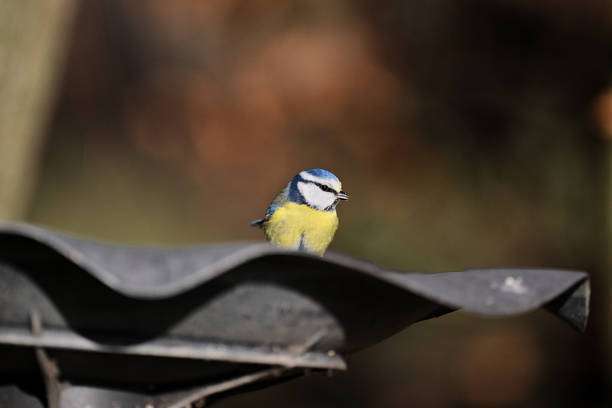
V. How bird baths alter the ecological structure of a garden
When birds frequently visit a garden, subtle changes occur in the ecological structure. Birds prey on pests such as mosquitoes, caterpillars, and beetle larvae, thus reducing damage to the plants. This natural method of pest control is gentler and more sustainable than chemical pesticides.
Meanwhile, birds disperse plant seeds during their activities, promoting the spread of plant diversity. This means that a seemingly insignificant pond may indirectly participate in the succession process of the entire garden’s plant community.
More importantly, the presence of birds attracts other creatures such as butterflies, bees, and small mammals. This multi-species coexistence is an important indicator of a healthy ecosystem, and bird bathing is one of the starting points that triggers this state.
VI. The changing role of bird bathing in different seasons
bird baths is not consistent throughout the year. In summer, they are crucial for cooling and hydration; in dry seasons, they are a scarce water source; and in winter, they can even be the dividing line between survival and death.
In cold regions, unfrozen water is extremely precious. Birds’ need for water in winter is no less than their need for food. A well-designed pool can provide life support for birds by changing the water to warm water or using antifreeze features.
Seasonal changes also affect bird species. Migratory birds often rely on stable water sources for short stops during their migration, and a well-maintained pond can become an important resupply point along their migration route.
VII. A Bridge Between Human Observation and Emotional Connection
Beyond its ecological value, bird bathing also establishes a unique connection between humans and nature. By observing birds’ behavior in the water, people can gain a more intuitive understanding of natural laws and appreciate the fragility and resilience of life.
This kind of observational experience often prompts people to pay more attention to environmental protection, adjust their gardening methods, and reduce interference with the ecosystem. In this sense, the pond has transcended its functional function and become a medium for environmental education.
For families with children, the pond is a natural classroom. Children can understand the concept of ecological balance by observing bird behavior, and this experience is far more profound than book knowledge.
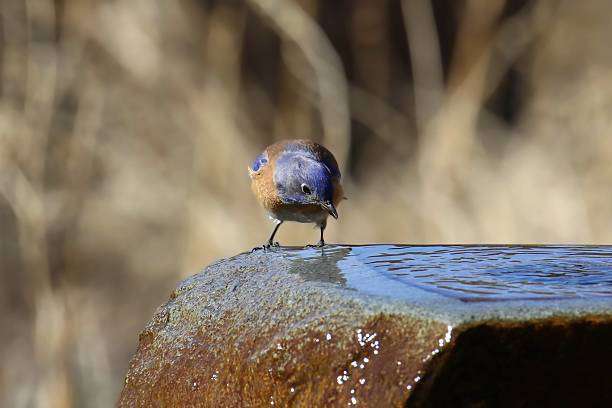
8. A bird bath is not a decoration, but a responsibility.
When someone chooses to place a bird bath in their garden , they are also taking on a certain ecological responsibility. Regular cleaning, changing the water, and preventing mosquito breeding are all essential maintenance tasks.
neglected bird bath can actually become a vector for pathogen transmission. Therefore, understanding the true purpose of a bird bath also means understanding the principles behind its use. It’s not simply about “putting out a basin,” but rather a continuous ecological intervention.
Therefore, the value of a pond should not be reduced to simply “providing water for birds.” It is a comprehensive system that integrates physiological support, behavioral guidance, ecological regulation, and human emotional connection.
IX. Redefining the Location of Bird Baths in Modern Gardens
In modern horticultural concepts, gardens are no longer just spaces for people to admire, but rather buffer zones where humans and nature coexist. The role of bird baths in these gardens is gradually moving from the periphery to the core.
It reminds us that nature is not out of reach, but can interact continuously and genuinely with human life through a small basin of water. When this interaction is respected and maintained, the garden is no longer just “beautiful,” but truly “alive.”
Conclusion: True value lies in the overlooked details.
Bird bathing has long been underestimated precisely because it seems too simple. However, it is this very simplicity that makes it a link connecting many key links in the ecosystem.
When we stop seeing the bird bath as just a container for water and instead see it as an ecological support system, our understanding of the garden, of nature, and of our own role will change accordingly.
Truly valuable designs are often not ostentatious , but rather those details that operate silently in daily life yet profoundly impact our lives. Bird Bath is precisely such a design.
FAQ
1. Why do experts recommend providing a bird bathing tub before a bird feeder?
In an unfamiliar environment, birds first seek out a safe water source, not food. Water is used not only for drinking but also for grooming feathers and regulating body temperature. A stable water source builds trust, and only after birds confirm the environment is safe will they accept food.
2. Are gardens without water sources truly considered “dead zones” by birds?
Yes. For most birds, a lack of a stable water source means they cannot stay for long. Even with ample food, gardens without water sources struggle to sustain bird activity.