4 principles for layering bird baths with different plant arrangements: A wrong layout is a waste of space.

Bird Baths and Garden Plant Layers
Bird baths in gardens are more than just water sources and decorations; they are crucial elements of the garden’s ecosystem.
Their placement, in conjunction with the surrounding plant layering, directly impacts birds’ frequency of use, comfort, and sense of security.
If poorly designed, even expensive or elaborate bird baths may be ignored by birds and become mere decorations.
Many families, when setting up bird baths, only consider aesthetics or ease of watering, neglecting the logical relationship between plant height, density, layering, and bird behavior.
In gardens, plant layers are typically divided into tall shrubs, mid-layer vegetation, and low-lying herbaceous plants.
Birds use plant layers to assess safety, concealment, and escape routes when using water sources.
A well-designed plant layering not only increases bird bathing efficiency but also optimizes the garden’s microenvironment, such as temperature, humidity, and light, making birds feel safe and comfortable when preening, drinking, and foraging.
Logic 1: High-altitude vegetation provides a sense of privacy and security.
One of the most important psychological needs for birds when using a bird bath is a sense of security.
Tall vegetation, such as trees or shrubs, can provide birds with cover to observe predators from the air or from a distance.
Placing a bird bath near these plants allows birds to observe their surroundings while preening or drinking, and if they detect a threat, they can quickly fly to higher ground for refuge.
However, excessively tall or dense vegetation that completely obstructs the view of the bird bath can reduce birds’ sense of security.
Many gardens mistakenly place bird baths directly beneath dense shrubs, forcing birds to navigate through thick foliage to reach the water, increasing their sense of threat and reducing its use.
The scientific approach is to choose a location on the outer edge or partially shaded by tall vegetation, allowing birds to maintain an open view while receiving cover, thus satisfying their psychological need for security.
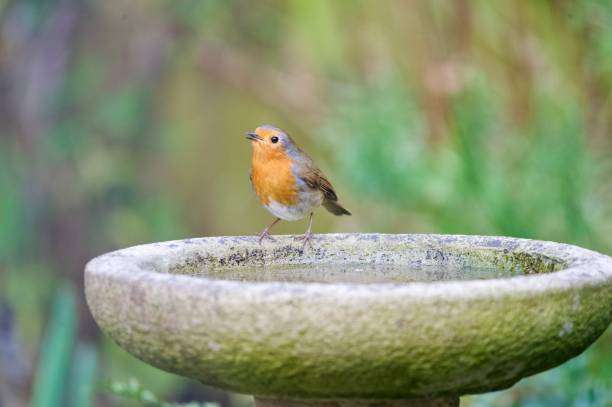
Logic 2: Mid-layer vegetation creates transitional and activity spaces
Mid-level vegetation, such as shrubs, shrub edges, or taller perennial flowers, serves as a transitional layer.
They provide birds with short-distance shelter and form natural pathways, allowing birds to quickly descend from higher ground to the water basin or safely leave after preening.
When arranging mid-layer vegetation, density and spacing should be considered.
Too dense vegetation will hinder birds from entering the water basin, creating psychological stress; too sparse vegetation will lose its transitional and concealing function.
Appropriate mid-layer vegetation not only improves accessibility to bird baths but also guides bird routes, making preening and drinking behaviors more natural and smooth.
At the same time, mid-layer vegetation can absorb some sunlight and wind, regulating the microclimate around the water basin and creating a comfortable environment for birds.
Logic 3: Low-growing vegetation improves the microenvironment and aesthetics.
Low-lying vegetation, such as ground cover, lawns, or dwarf flowers, primarily influences the microenvironment around bird baths.
They lower the surface temperature around the water basin, reduce water evaporation, and provide a soft, cushioned area, minimizing the impact on birds upon landing.
Low-lying plants also absorb excess moisture, maintaining ground humidity and preventing mud or waterlogging, thus avoiding the breeding of mosquitoes and microorganisms.
Furthermore, variations in the color, shape, and height of low-lying vegetation can enhance the visual appeal of bird bathing, making the water basin a natural focal point in the garden.
Birds using the water basin also tend to stay longer due to the comfort and naturalness of the surrounding environment, resulting in more complete preening and more natural drinking behavior.
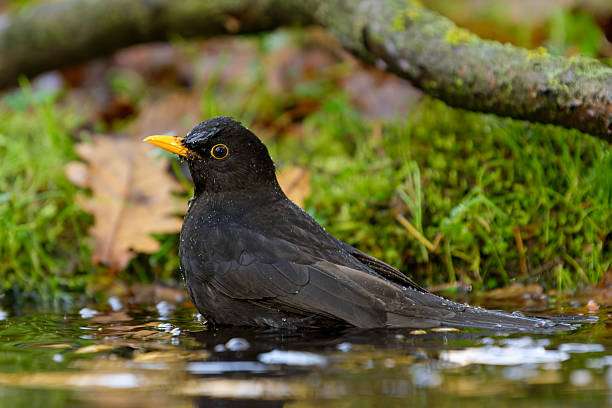
Logic 4: Optimize line of sight and escape routes through hierarchical combination
A bird bath layout lies in the overall layering, rather than the placement of individual plants.
The upper layers provide long-range concealment and observation, the middle layers form activity channels and short-range cover, and the lower layers regulate the microenvironment and aesthetics.
This scientific combination of three layers determines the bird’s field of vision and the ease of its escape routes when using the water basin.
Most families focus solely on visual appeal when decorating bird baths, neglecting the psychological and behavioral needs of birds.
This results in bird baths becoming decorative items that are “visible but unusable.”
A scientifically designed layered arrangement allows birds clear vision when entering the water basin, adequate cover, and the ability to quickly escape via mid- or high-level vegetation.
This not only ensures the birds’ sense of security but also increases the utilization rate of the water basin and enhances the garden’s ecological function.
Bird Bath Layout that Balances Functionality and Aesthetics
Based on these four principles, the scientific method for arranging a bird bath is as follows:
- First, choose a location on the periphery of tall vegetation or in a semi-shaded area to give birds a sense of psychological security when using it;
- second, arrange mid-level vegetation around it to form a natural transition and activity route, ensuring smooth entry and exit;
- third, use low-growing plants to regulate the microenvironment, control temperature and humidity, and enhance the viewing effect;
- finally, coordinate the combination of the three layers of plants with the overall location of the bird bath to ensure an open view, clear escape routes, and create a comfortable and safe environment for birds.
In practice, the depth, material, and cleaning management of the water basin should be considered to ensure suitable water temperature, proper microbial control, and reduced risk of mosquito breeding.
By appropriately combining plant layers with bird baths, the garden ecosystem becomes more vibrant, birds frequently use the water basins, and both visual appeal and ecological function are enhanced, achieving a win-win situation for both aesthetic value and functionality.
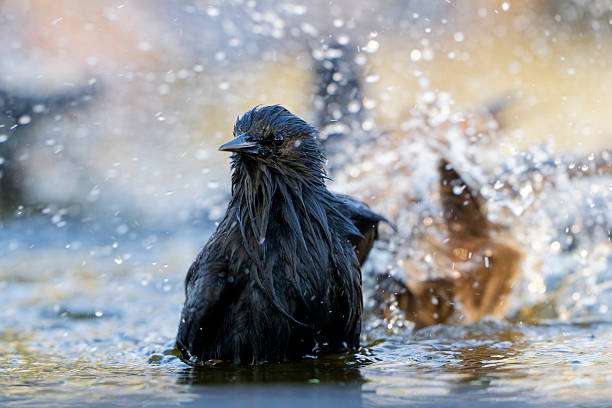
Conclusion: The Cost of Misaligned Layout
A bird bath directly depends on the proper arrangement of plant layers.
Upper layers provide a sense of security from a distance, middle layers form transitions and escape routes, and lower layers optimize the microenvironment and aesthetics; these four layers complement each other.
An improperly arranged bird bath, no matter how expensive or exquisite, may be ignored by birds and become merely decoration.
Understanding the relationship between plant layers and bird behavior and psychology, and scientifically arranging a bird bath, is key for every garden enthusiast to enhance ecological value, ensure bird health, and improve the garden’s aesthetic appeal.
FAQ
Do birds use bird baths less when placed under tall vegetation?
Dense, tall vegetation obstructs their view, preventing birds from observing their surroundings and making them feel insecure, thus reducing the frequency of bird bathing.
How does mid-layer vegetation affect bird bath usage?
Mid-layer vegetation forms activity channels and short-range shelter, making it easier for birds to enter and leave the water basin, while also increasing their sense of psychological security.
What role do low-lying vegetation play in landscaping?
Low-lying vegetation regulates the microenvironment around water features, lowers surface temperature, reduces evaporation and water accumulation, while also providing aesthetic appeal and increasing the time birds spend there.