Bird bath shocking revelation: 4 factors determine whether birds will visit

A bird bath, at first glance, may seem like a simple object, but in reality, its role and influence in the overall garden environment far exceed what most people imagine. Many beginners who are just starting out in gardening and interested in attracting birds often naively believe that simply placing a pretty, beautifully designed water bowl in the garden will automatically attract those adorable birds to come and happily drink, quench their thirst, and comfortably bathe and preen their feathers.
However, the reality is not so simple. Birds are highly sensitive to their environment, and whether they will patronize a bird bath in a garden is influenced by a combination of factors.
In the following sections, this article will reveal four key factors that will help you understand how to scientifically and rationally arrange a bird bath to immediately attract birds to your garden. Furthermore, frequent bird visits can improve the overall ecological environment of the garden, making it more vibrant, harmonious, and beautiful.
Factor 1: Location of water source and sense of security
Birds are naturally alert and highly sensitive to predators and potential threats. An unsuitable location can turn a bird bath into a no-go zone, with birds preferring to stay away rather than risk using it. The placement of water sources must not only consider the balance between openness and shelter but also the safety of the surrounding environment. Ideal locations are usually near bushes, branches, or building corners, allowing birds to retreat easily while drinking or bathing.
Height is equally crucial. Bird baths that are too low are easily accessible to cats, dogs, or other predators, while those that are too high make them difficult for small birds to use. The ideal height is generally about one meter from the ground or slightly below low branches, providing both a comfortable perch for birds and a sense of security. Furthermore, the location of water sources impacts the garden’s micro-ecosystem. A properly placed bird bath attracts birds and stimulates interaction among insects, small invertebrates, and plants, creating a miniature food chain that brings life to the entire garden.
Factor 2: Water quality cleaning and maintenance
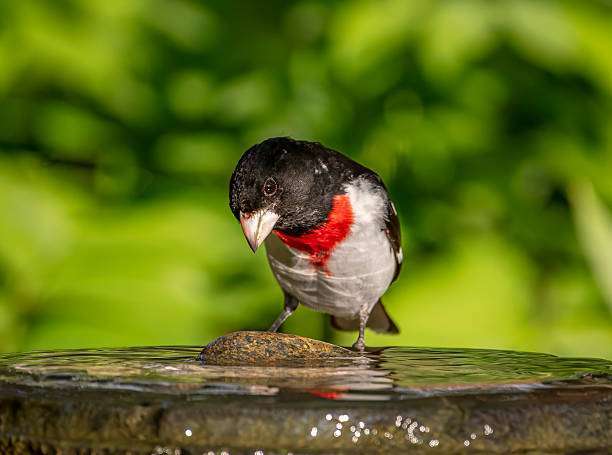
Water cleanliness is the most direct factor in a bird’s decision to use a bird bath . Birds are highly sensitive to the sight and smell of water; if the water is cloudy, smelly, or hasn’t been changed for a long time, they will immediately avoid it. Many beginners believe that as long as there is water in the water dish, it’s fine, but they overlook the importance of water quality. Keeping the water clean not only ensures that birds feel safe using it, but also prevents the spread of diseases.
In routine maintenance, the water should be changed daily or every two days, especially during hot seasons or when birds use the bird bath frequently, requiring more frequent water changes. Regularly cleaning the inside of the bird bath prevents the accumulation of algae, scale, or sediment, keeping the water clear. The water depth is also crucial; too deep may scare away small birds, while too shallow may not meet the needs of larger birds. Adjusting the water depth and edge shape by observing the size and habits of common bird species in the garden will ensure the birds use the water comfortably and safely.
Water quality not only affects the frequency of bird visits but also the overall environment of the garden. Clean water attracts insects to drink or lay eggs, thus providing a food source for birds and forming a natural and stable micro-ecological cycle. This ecological interaction not only encourages frequent bird visits but also enriches the garden’s ecosystem.
Factor 3: Bird Bath Design and Structure
a bird bath directly impacts the bird’s experience. Shape, material, edge design, and stability are all crucial. Small birds prefer shallow water and smooth edges so they can stand and bathe safely; larger birds need deeper water for full immersion. Edges that are too high or sharp can deter birds and may even cause injury.
In creating a bird bath, the choice of materials is equally crucial. Ceramic, stone, and robust resin offer excellent stability. Firstly, these materials possess weight and sturdiness, ensuring the bird bath can be placed securely in the garden. Secondly, they also have the unique function of regulating water temperature.
In the hot summer, they can absorb some heat to prevent the water temperature from getting too high, allowing birds to enjoy cool and comfortable water even in the sweltering heat. In the cold winter, they can also slow down the rate at which the water temperature drops, preventing birds from coming into contact with icy cold water. In this way, birds can enjoy a comfortable and pleasant bird bath in any season.
However, while plastic bird baths are lightweight and easy to move and place, they also have significant drawbacks. They are prone to tipping over, especially in windy weather or when birds are actively moving around inside. Furthermore, plastic is susceptible to temperature changes; it may deform at high temperatures and become brittle and fragile at low temperatures. Therefore, if you choose to use a plastic bird bath, you need to use a sturdy stand. The stand will support and secure the bird bath, enhancing its stability and preventing it from tipping over.
When evaluating the various characteristics of a bird bath, stability is more important than aesthetics. A sturdy bird bath is especially crucial, particularly in severe weather conditions such as storms or when multiple birds are using it simultaneously.
Only when the bird bath is sturdy enough can birds feel safe to stay in it without worrying about being startled or injured by the basin shaking or tipping over. In this way, birds will frequently visit the bird bath, regarding it as a safe and reliable place to rest and play.
Furthermore, the surface finish and color of the water dish also influence its attractiveness to birds. Light and natural colors, such as pale beige, soft gray, and greens close to those found in their natural environment, are more readily accepted by birds. This is because these colors are similar to those birds are familiar with in their natural surroundings, making them feel safe and comfortable. Conversely, overly bright colors, such as glaring bright red or vibrant fluorescent colors, may arouse birds’ alarm or fear. In nature, bright colors are often associated with danger or poison, so birds are wary of such colors.
Therefore, properly designing the depth, edge shape, material, and color of the bird bath is an effective way to increase its usage by birds. By carefully adjusting the depth of the water bath to meet the birds’ needs for bathing and drinking without making it too deep and posing a drowning risk; designing a suitable edge shape to facilitate birds’ entry and exit; choosing appropriate materials to ensure stability and water temperature regulation; and using colors that are easily accepted by birds, the bird bath can become a core feature of the garden ecosystem, attracting more birds and adding vitality to the garden.
Factor 4: Light, Time and Environmental Habits
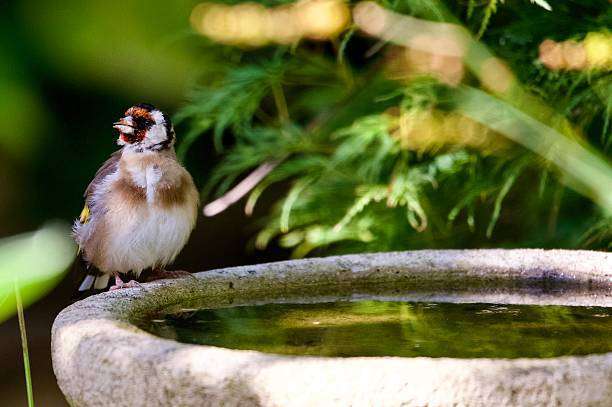
Birds’ routines are closely linked to light. Early morning is their most active time, and also the peak period for drinking and bathing. Beginners often overlook the importance of light and time, resulting in infrequent bird baths. An ideal bird bath should make full use of morning light while providing adequate shade, allowing birds to bathe in the light while feeling safe.
Birds develop relatively fixed habits regarding their environment and specific times during their survival. It’s as if they follow an internal biological clock and environmental laws, exhibiting specific requirements and adaptation patterns to their environment and time. If the supply of water and food in a garden can be maintained regularly, like following a precise schedule, then the birds will gradually develop a long-term recurring pattern. They will regard this garden as a stable and reliable source of resources, much like humans returning periodically to a familiar and well-stocked supermarket to obtain what they need.
By properly arranging bird baths, carefully preparing suitable food, and providing appropriate perches, a stable environment can be created. Properly arranging bird baths requires consideration of factors such as location, size, and depth, ensuring both ease of use and safety for the birds. Food should be selected according to the different bird species’ diets, providing a diverse range of food sources. Perches should be designed with consideration for both concealment and comfort. Such an environment fosters a strong dependence on the garden among birds, making it their home and a place they will stay and live in long-term.
Seasonal changes are also an important factor to consider when attracting birds. In summer, the sun is strong and lasts for a long time, so it’s important to provide some shade for bird baths. For example, planting tall plants or building a simple shade structure near the bird bath can prevent the water from getting too hot, allowing birds to have cool water to drink and bathe in the hot weather.
In winter, when temperatures are low, water freezes easily. Measures need to be taken to prevent the water from freezing, such as using heating equipment or frequently changing the water to warm water, so as to ensure that birds have a safe water source all year round.
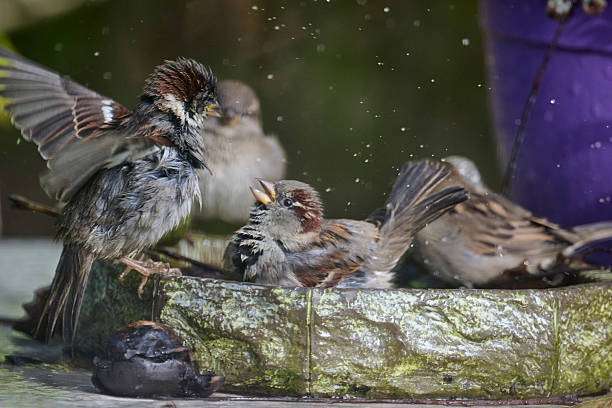
A proper balance of light, time, and environmental habits is of paramount importance. It not only increases the frequency of bird use of the garden, encouraging more birds to come and roost, but also further enhances their dependence on the overall garden environment. Once birds develop a high degree of dependence on the garden, they will engage in various activities such as breeding and foraging, thus forming a natural, healthy, and stable ecosystem. In this ecosystem, birds, plants, insects, and other organisms in the garden are interdependent and mutually influential, collectively forming a harmonious ecological whole.
Comprehensive analysis and optimization strategy
Having understood these four key factors, garden owners need to start with the overall layout and detailed design. First, carefully observe the behavior and activity areas of common birds, analyzing their safety preferences and drinking needs. Second, choose suitable locations and heights to ensure birds can retreat quickly and feel safe. Then, keep the water clean, regularly clean the bird bath , and adjust the water depth and edge design appropriately to meet the needs of different bird species.
Stability and material selection are also crucial factors. While ceramic or stone bird baths are heavier, they offer stability and a comfortable user experience; plastic bird baths require additional support. The color, shape, and edge design should closely resemble the natural environment to avoid triggering birds’ alarm. Finally, by utilizing lighting and time patterns, combined with the layout of food and roosting areas, birds can develop a long-term habit of returning to the bird bath , thus maximizing its value.
Through scientific planning, bird baths not only attract birds but also improve the garden’s ecology, fostering interaction among insects, small invertebrates, and plants to form a complete micro-ecological cycle. Each bird visit affirms the garden’s ecological design and brings joy and satisfaction to people through observing nature.
Conclusion
Bird baths are much more than just simple waterers; they are an essential part of the garden ecosystem. Whether birds visit depends not only on the presence of the water bowl but also on multiple factors such as location, sense of security, water quality, design, lighting, and environmental habits. By mastering these four key factors and properly arranging and maintaining your bird bath , your garden will become a paradise for birds, while simultaneously improving the overall ecological environment and creating a vibrant and harmonious garden with nature.
With proper preparation and scientific arrangement, a bird bath can truly work, attracting birds to your garden immediately, bringing vitality and life, and allowing every visitor to feel the beauty and tranquility of nature.
FAQ
1. Can bird bathtubs really spread diseases?
If the water isn’t changed regularly and birds congregate excessively, there is a risk of disease transmission. However, proper cleaning and dispersing of the birds can significantly reduce this risk.
2. Are multiple bird bathing tubs safer than one?
Yes. Multiple bird bathing tubs can disperse the flock, reduce crowding, and lower the probability of fighting and disease transmission.