The surprising truth about bird bath: 6 reasons why birds need to bathe more than you think

I. A seriously misunderstood behavior: Birds bathe not to be “clean”.
When people first see birds fluttering and shaking their wings in a bird bath , they almost instinctively try to understand this behavior using human experience. Bathing, in human understanding, means cleaning the body, removing dirt, and maintaining hygiene. Therefore, many people naturally assume that birds bathe simply to “clean themselves.”
However, stopping at this level would completely underestimate the importance of birds’ bathing behavior. In fact, for birds, bathing is not a dispensable daily habit, but a key behavior that is directly related to survival efficiency, flight ability, body temperature regulation, and even reproductive success.
The essence of birds bathing is not to pursue “cleanliness,” but to actively maintain an extremely precise and almost irreplaceable bodily system. This system is their feathers.
Second, feathers are not merely decorations, but rather the “life-sustaining equipment” of birds.
In the eyes of humans, feathers often possess aesthetic attributes. Whether the color is vibrant and the texture is beautiful are often important criteria for evaluating a bird. However, in the survival logic of birds themselves, feathers are far more than just appearance; they are a whole set of highly specialized functional structures.
Feathers play multiple roles, including generating lift for flight, maintaining body temperature, providing waterproofing, and transmitting signals. Even a problem in any one of these areas can significantly impact a bird’s survival. Therefore, the condition of a bird’s feathers directly determines its “work efficiency.”
Bird bathing is one of the important ways birds maintain the function of their feathers. Through bird bathing , dust, pollen, parasites, and excess oil on the surface of the feathers are removed, and the disordered structure between the feathers due to static electricity, pollution, or wear is rearranged during the bathing and subsequent grooming process.
This is not a simple cleaning process, but a systematic “performance calibration”.
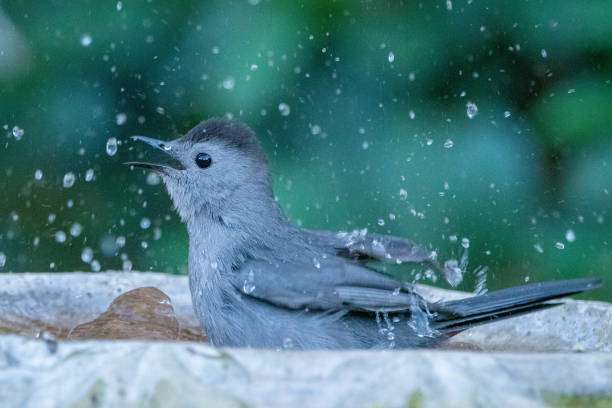
Third, birds cannot sweat, so bathing is a key way for them to regulate their body temperature.
Unlike mammals, birds lack a well-developed sweat gland system and cannot quickly dissipate heat through sweating. When the ambient temperature rises, their feathers actually act as a barrier to trap heat. If they cannot cool down in time, birds are highly susceptible to heat stress, which can even lead to death in severe cases.
A bird bath becomes an extremely efficient way to cool down at this time. Moisture adheres to the feathers and skin surface, evaporating and carrying away a large amount of heat, thus helping the bird quickly lower its body temperature. This cooling mechanism is far more stable and safer than panting.
Especially in summer or arid regions, birds with access to a stable water source experience significantly reduced survival stress. This is why large numbers of birds often gather around bird baths during hot weather . For them, it’s not just a place to bathe, but an important physiological buffer zone.
IV. The Hidden Link Between Bathing and Parasite Control
In their natural environment, birds are constantly exposed to the risk of parasites. External parasites such as mites and lice often hide at the base of feathers or in skin folds, continuously absorbing nutrients and causing infections.
If the number of parasites gets out of control, birds will not only experience persistent discomfort, but their ability to fly will also be affected by feather damage. Bird bathing is one of the important ways that birds actively combat these parasitic risks.
a bird bath can disrupt the parasites’ attachment environment and reduce their survival rate. More importantly, after a bird bath , birds preen their feathers for an extended period. This process further removes any remaining parasites and redistributes protective oils to the feather surface.
This means that bird bathing is not an isolated activity, but a key part of the parasite management system.
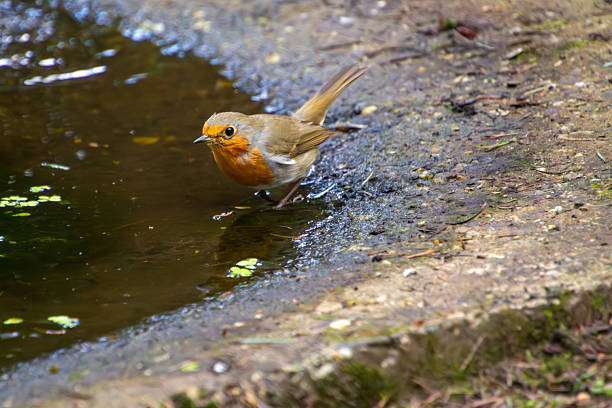
V. The Relationship Between Bathing Behavior and the Psychological State of Birds
Birds are not creatures that act solely on instinct; they also have emotional responses and stress mechanisms. When the environment changes drastically, resources become unstable, or the risk of predation increases, birds exhibit obvious alertness and stress.
The act of taking a bath in a safe and suitable bird bath significantly indicates a high degree of trust the bird has in its surroundings. Birds are extremely sensitive and adept at detecting danger. Only when they have, through their keen senses and prolonged observation, definitively confirmed the absence of any immediate threat will they lower their guard. In this situation, they gradually shift their attention from being highly focused on guarding against potential dangers to protecting themselves.
Generally speaking, when faced with unknown dangers and potential threats, living beings find it difficult to fully engage in seemingly relaxing behaviors like bathing. The fact that birds can bathe freely in their bird baths demonstrates their confidence in the safety of these baths.
Therefore, the frequent bird bathing behavior is often a fairly clear signal that the environment in which birds live is at a high level of safety. As we see in city gardens or residential areas, as long as the water source for these bird baths is scientifically designed to meet the birds’ requirements for water depth and quality while minimizing external disturbances, the birds will gradually establish a stable and regular bathing habit after a period of adaptation and observation. They will come here at fixed times and leisurely enjoy the bathing process.
From a deeper perspective, bird bathing is more than just a simple physical maintenance behavior for birds. Cleaning their feathers removes dust, parasites, and other impurities, keeping them clean and healthy, which helps them fly better and maintain body temperature.
But at the same time, bird bathing is also a psychological “relaxation mechanism.” Bathing comfortably in a safe environment soothes their tense nerves, eliminates inner unease and anxiety, and allows them to return to a relatively calm and comfortable state of mind.
VI. Different bird species have varying degrees of dependence on bathing.
While most birds need to bathe, the degree of dependence on water varies significantly among different species. Birds living in arid environments are often extremely sensitive to water sources and will repeatedly utilize a stable body of water once found. Birds living in wetlands or near water bodies, on the other hand, incorporate bathing into their daily activities.
Small songbirds typically prefer shallow water environments for quick entry and exit, reducing risk. Larger birds, on the other hand, may require a larger surface area to bathe fully. This difference illustrates that bathing is not a uniform process, but rather closely related to the bird’s size, habitat, and behavioral habits.
Therefore, if artificial water sources provided by humans can better meet the natural bathing needs of birds, their usage frequency and effectiveness will be significantly improved.

7. Feather grooming after bathing is an even more important step than the bath itself.
Many people overlook a detail: after bathing, birds often spend a lot of time preening their feathers. They carefully comb their feathers with their beaks, realign the rachis, and apply oil secreted from their preen glands.
The entire process of a bird bathing, from initially wetting its feathers to the subsequent series of actions, largely determines the final result. It’s important to understand that bathing for birds is not simply about getting their feathers wet. If they merely bathe without subsequently grooming their feathers, it can actually have negative consequences. Bathing can disrupt the feathers’ original orderly structure. If this disordered arrangement isn’t addressed promptly, it reduces the bird’s flight efficiency, increasing air resistance and requiring more energy.
It is precisely for this reason that birds need to find a relatively safe and dry environment to complete their grooming after bathing. In a safe environment, they don’t have to worry about sudden attacks from predators and can preen their feathers with peace of mind; while a dry environment helps their feathers dry faster and makes it easier for them to straighten them. This also explains why we often see birds not flying away immediately after bathing, but perching on nearby branches or fences.
They are using this time to carefully preen their feathers. For birds, bathing is only the beginning of the entire cleaning process; only after completing the subsequent grooming work can they truly say they have completed an effective cleaning.
8. In the modern environment, bathing has become more difficult for birds.
As urbanization accelerates, natural water bodies are being largely replaced by paved surfaces, rainwater is rapidly lost, and stable water sources are dwindling. For birds, finding a safe, clean, and reusable bathing spot has become more difficult than ever before.
This is why, in modern environments, the importance of man-made bird bathing water sources for birds has been further amplified. Bathing is no longer just a naturally occurring behavior, but increasingly depends on the goodwill of human environmental design.
When birds have fewer opportunities to bathe, their feather condition, thermoregulation, and parasite control are all affected, leading to increased survival pressure.
9. Only by reinterpreting “bathing” can we truly understand the needs of birds.
When we step outside the human perspective and truly consider the physiological structure and behavioral logic of birds, we discover that bird bathing is far more than just a habit; it is a highly systematic survival strategy.
It connects multiple aspects such as feather function, body temperature management, health maintenance, safety perception, and environmental adaptation. A restriction in any one of these aspects will have a cascading effect on birds.
It is in this sense that bathing is far more important to birds than we imagine.
In conclusion: What you see is just splashing water; the birds are undergoing a survival battle.
When a nimble little bird gracefully darts into the shimmering water of its bird bath, it joyfully flaps its brightly colored wings, instantly sending sparkling water droplets soaring high like tiny pearls. At this moment, humans often only see this vivid and lively scene, thinking it’s just a fleeting, beautiful moment in life. However, in reality, within those seemingly brief few minutes, the bird is actually completing an extremely complex and incredibly efficient self-maintenance process.
For birds, bathing is not a mere indulgence like the occasional relaxing bath for humans; it is an essential activity for survival. Nor is it like human adornment, merely an external decoration. It is a crucial guarantee for their health and normal survival. Only by deeply understanding this can we truly comprehend why birds are so heavily reliant on water and why they are always active near water sources. Only then can we truly appreciate what a seemingly insignificant bird bath means to them—perhaps it is the key to maintaining life and bodily functions.
FAQ
1. Why do many bird bath tubs look beautiful but are rarely used by birds?
Because these designs often prioritize human aesthetics, neglecting water depth, slip resistance, stability, and a sense of security. Birds care more about safety and usability than about aesthetics.
2. What is the most direct consequence of choosing the wrong height for a bird bathing tub?
Birds will completely avoid it. If the height is too low, it will be vulnerable to predation on the ground; if it is too high, it will affect the landing and takeoff of small birds, both of which will directly reduce its usability.