5 essential secrets about bird bath that will instantly attract birds

Birds are the most lively visitors to the garden. Their morning calls and graceful dances not only enhance the beauty of the landscape but also bring joy and relaxation to people.
However, many garden novices often overlook a crucial factor when setting up bird shelters: the preparation and selection of bird bath facilities directly determine whether birds will be willing to visit .
A bird bath is far more than just a simple container for birds to drink from; its function and impact far exceed your imagination, and it can even alter the ecological balance of a garden. This article will reveal five key secrets to make your bird bath truly attract birds and become a vital center of vitality in your garden.
Secret #1: The location of the water source determines whether birds dare to come.
One of the most easily overlooked points by novice gardeners is that the location of a bird bath directly affects the sense of security of birds. What may seem like an open area in the garden is convenient for humans, but can be a dangerous “dead zone” for birds. Birds are naturally alert; their vision and hearing are extremely keen, and they are incredibly accurate in judging the threat of predators.
If a bird bath is placed in an overly exposed location, birds would rather not use it than risk approaching it. The ideal location should be both open and provide a sense of concealment , such as near bushes, branches, or corners, allowing birds a quick escape route when drinking or bathing.
Height is equally important. A bathtub that’s too low is easily accessible to cats, dogs, or other predators, causing birds to feel unsafe and avoid it. A bathtub that’s too high makes it difficult for small birds to reach, thus reducing its attractiveness. The optimal height is usually slightly above the ground or slightly below the branches, allowing birds easy access while providing easy safety. Furthermore, the location of the water source also affects the garden’s ecology.
A well-arranged bird bath can attract birds, stimulate the activity of insects and small invertebrates, forming a miniature food chain. These organisms then become food for the birds, creating a dynamic balance and a rich diversity of biological activity in the garden.
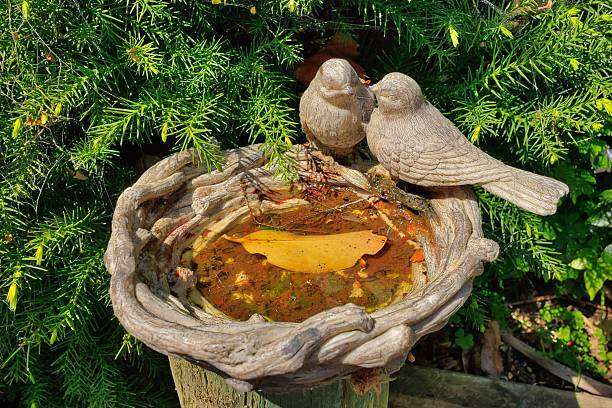
Secret #2: Clean water is key to attracting birds
No matter how beautiful a bird bath may look, birds won’t approach if the water isn’t clean. Birds are extremely sensitive to water quality; they judge whether water is safe through sight, smell, and even subtle ripples. Dirty, smelly, or stagnant water will deter birds. Many beginners overlook this for convenience, but clean, clear water is, in fact, a primary requirement for birds to visit.
Maintaining clean water is not only about visual appeal but also about health. When birds bathe in water, their feathers absorb moisture, and if bacteria or parasites are present, diseases can easily spread. For gardening beginners, changing the water daily or every two days is ideal. In hot weather or if birds use the water frequently, the frequency of water changes should be increased. Regularly cleaning the inside of the bird bath to prevent algae and scale buildup will also encourage birds to use it. Clean water not only allows birds to drink and bathe safely but also keeps the garden environment fresh, preventing the breeding of insects or unpleasant odors.
Water depth is equally important. Too deep a water bath is unsafe for small birds, while too shallow a water bath may be uncomfortable for large birds. By observing the size and behavior of common bird species, the water depth can be adjusted to make bird bathing both safe and comfortable, thereby attracting a wider variety of bird species.
Secret Three: The depth and shape of the bird bath design determine its attractiveness.
a bird bath not only affect its aesthetics but also directly influence whether birds will use it. Different birds have different body sizes and habits, and therefore different preferences for the depth and rim design of the water basin. For example, small birds prefer shallow water with gently sloping edges so they can stand and bathe safely, while larger birds need slightly deeper water to allow for full immersion. The basin should ideally be slightly round or oval in shape, avoiding sharp edges to reduce the risk of injury to the birds.
In terms of material selection, ceramic, stone, or thick resin materials all provide good stability for bird baths. This is because ceramic is hard, stone has a certain weight, and thick resin is quite sturdy. They not only allow the bath to be placed stably in one place, but also effectively prevent rapid changes in water temperature. When the outside temperature changes, these materials act as a buffer, preventing the water temperature in the bird bath from rising or falling rapidly, thus providing a relatively stable bathing environment for the birds.
In comparison, while plastic bird baths are lightweight and easy to move and place, they also have significant drawbacks. Because plastic is relatively soft and lightweight, these bird baths are prone to tipping over, and they are also susceptible to deformation after being subjected to external pressure or prolonged use. To compensate for this, plastic bird baths need to be used with a sturdy stand. The stand provides support and stability, allowing the plastic bath to be placed more stably and reducing the likelihood of tipping over and deformation.
The edge design plays a crucial role in the overall design of a bird bath. A slightly outward-curving edge offers several advantages. For birds, it makes it easier for them to stand. Birds need a suitable place to perch while bathing, and the outward-curving edge provides a relatively spacious and stable standing area, allowing them to easily stand on the edge of the bird bath. Simultaneously, the water ripples generated during bathing can cause excessive splashing if the edge design is inadequate. The slightly outward-curving edge helps to contain the water ripples, preventing excessive splashing and keeping the area around the bird bath clean and dry.
Only by fully considering the physiology and behavioral habits of birds can a pond truly be used by them, rather than merely existing as a decorative item. We must understand that the primary purpose of a pond is to provide birds with a place to bathe and drink. Therefore, when designing and constructing a pond , we must consider the birds’ perspective and meet their various needs. Only in this way can the pond fulfill its proper function and become a beloved living facility for birds.
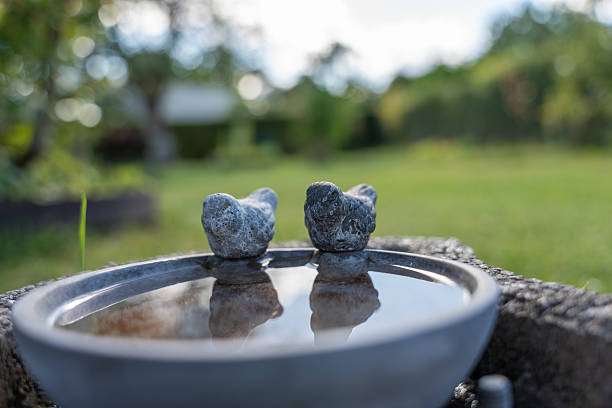
Secret Four: Stability and Materials, Ensuring Birds Feel at Ease
Birds bathe quickly and unsteadily; if the pool is prone to tipping over, they will naturally not try again. Stability is often more important than appearance. Novice gardeners are often attracted by beautiful designs but overlook factors such as weight, base width, and support structure, which directly affect the bird bath ‘s user experience. A sturdy bird bath can withstand wind and rain and support multiple birds simultaneously, thus increasing its appeal.
The material also affects temperature and comfort. For example, ceramic and stone are less prone to overheating or cooling in sunlight, making bird bathing safer and more comfortable. While plastic is lightweight, it is easily deformed under high or low temperatures, and can even become unstable. To enhance stability, a wider base or a fixed support at the bottom can be chosen to ensure that the bird bath does not tip over easily. In addition, regularly checking the bird bath’s stability to prevent the base from loosening due to prolonged exposure to wind and rain is also key to maintaining its attractiveness.
Secret Five: Utilize natural light and timing to increase bird visitation rates
Over their long history of survival and reproduction, birds have developed a natural habit in relation to light and time. They seem to have a mysterious harmony with the rhythms of nature, keenly sensing changes in light and the passage of time. In the early morning, the soft light, like a thin veil, gently falls upon the earth, creating a tranquil and peaceful atmosphere. This is the most active time for birds, and also their peak period for drinking and bathing.
Numerous scientific studies clearly show that birds have a distinct preference for the time they use water, especially in the morning. In the warm, soft morning light, birds frolic and bathe joyfully in the water. This isn’t just to keep their feathers clean; bathing in the morning light brings many unexpected benefits. On one hand, it enhances their alertness, enabling them to react more quickly to potential dangers; on the other hand, it also helps improve their foraging efficiency, making them more adept at finding food.
For beginners who are just starting out with bird keeping or want to provide a suitable living environment for their birds, setting up a bird bath can make full use of the precious morning light and suitable surrounding shelter. With proper arrangement, a safe and comfortable bathing environment can be created for the birds. In such an environment, birds can enjoy bathing without any worries, as if they are in their own private paradise.
Besides lighting, timing also affects the frequency of bird visits. Birds develop fixed routines based on sunrise and sunset, food availability, and their surrounding environment. If there is a regular feeding schedule in the garden, considering these factors before setting up a bird bath can increase the likelihood of birds visiting.
For example, place bird baths near food areas, but at a safe distance, allowing birds to quickly access food after drinking or bathing. This environmental arrangement reinforces positive memories in birds, creating the impression that “this place is safe and comfortable,” thus encouraging them to return frequently.
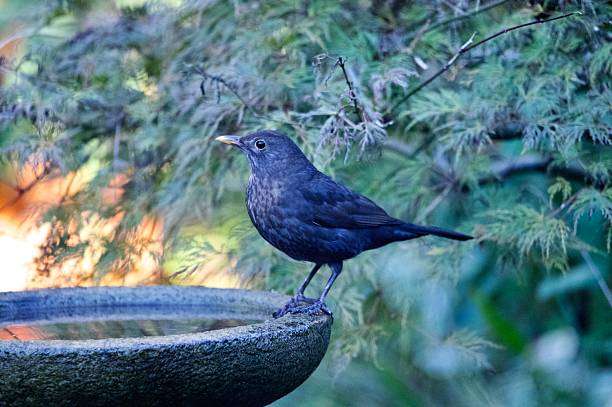
In conclusion, the bird bath is not just a water dispenser, but also the core of the garden’s ecosystem.
Through these five secrets, we can see that the role of a bird bath goes far beyond providing drinking water; it is an important component of the garden’s ecosystem. The location of the water source, water quality, design depth, stability, and considerations of light and time—every detail determines whether birds will visit and influences the garden’s micro-ecological balance. For novice gardeners, careful planning before placing the bird bath can not only attract birds immediately but also fill the garden with vitality and natural beauty.
Choosing the right bird bath , strategically placing it in a suitable location, ensuring clean and safe water, and understanding bird behavior will transform your garden into a bird paradise, allowing every visitor to experience the charm and tranquility of nature. Proper preparation and design will enable your bird bath to realize its true value, making birds the most active and captivating inhabitants of your garden.
FAQ
1. How do birds determine if a bird bath is safe?
They make a comprehensive judgment based on height, surrounding cover, water surface reflection, stability, and the availability of escape routes. If there is a clear risk, they will not approach it.
2. Why do birds prefer to use bird bathing tubs in the early morning?
Early morning is the peak activity time for birds. At this time, the risk of predation is relatively low, the water temperature is moderate, and bathing helps them preen their feathers and improve their flight efficiency for the day.