7 secrets to transforming your garden’s ecology introducing bird bath–a must-read for beginners

I. How can a seemingly insignificant device move the entire ecosystem?
In most people’s minds, the core of a garden’s ecology often comes from its plants. The abundance of tree species, the continuity of flowering periods, and the attraction of insects seem to be the key factors determining the quality of the ecosystem. In comparison, bird bathing appears overly simplistic, even somewhat marginalized.
However, true ecological balance is never dominated by a single element. It depends on the interaction between multiple key nodes. And water is precisely one of the most easily overlooked, yet most decisive, nodes.
When a stable, reusable water source appears in a garden, the operating logic of the ecosystem changes fundamentally. Bird baths are precisely such a game-changer. They don’t simply add a landscape feature; rather, they introduce a continuous, predictable ecological condition into the garden, triggering a series of chain reactions.
II. The presence of water redefined the garden’s appeal to life.
For the vast majority of wild animals, water is no less of a priority than food. In the natural environment, food can be obtained through migration and adaptation, but a stable water source often determines whether one can stay for an extended period.
When a garden contains no water features, it is, in the eyes of many creatures, merely a passageway for a brief stop. Occasionally, some birds might pass by, and perhaps some insects might make a brief visit, but they rarely establish a lasting relationship with the garden. In other words, for them, the garden is simply a temporary resting place on their journey, rather than a permanent habitat or a frequently visited location.
However, once a bird bath appears in this garden, the situation changes drastically, completely disrupting the previous state. The presence of water in the bird bath acts as a clear signal, sending a message to all surrounding creatures that this place possesses the basic conditions necessary for life. Water is crucial for living organisms; it is a key factor in the continuation of life. Moreover, this signal is not an abstract concept; it is constantly verified through concrete behavior. When the first birds arrive at the bird bath, begin bathing and drinking there, and repeatedly return to the location, other creatures will keenly perceive this change and adjust their activity patterns accordingly.
What was once a garden that passively existed, seemingly with little interaction with the surrounding creatures, was no longer just a space ignored or only briefly occupied by organisms. Instead, it began to become an ecological site actively chosen by many organisms. More and more creatures would come here voluntarily, making it a part of their lives, foraging, living, and reproducing here, gradually filling the garden with vitality and life.
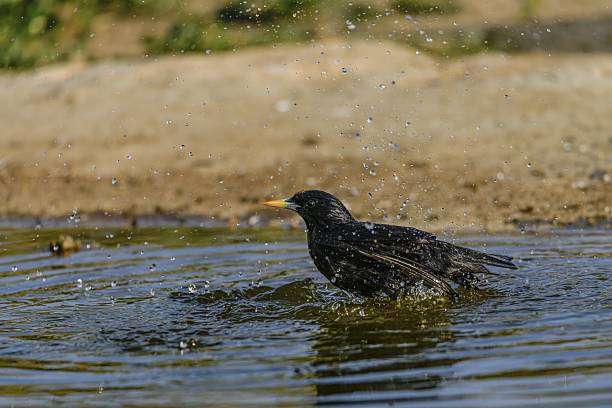
III. The stable appearance of birds marks the starting point of ecological structural transformation.
bird bathing is on the birds themselves. When birds regard a garden as a reliable water source, their frequency of visits increases significantly, and their stay also extends.
This change, though seemingly minor, has a profound impact. Birds are no longer just passing through; they are beginning to participate in the daily ecological processes within the garden. They hunt for insects, rest on plants, and even establish breeding territories in the surrounding area.
When birds’ behavior shifts from “passing by” to “using,” the fundamental conditions for ecological balance are altered. Gardens begin to have their own consumer hierarchy, rather than simply being collections of plants.
IV. Pest control methods are quietly shifting from chemical to biological.
In gardens where birds are not present for extended periods, insect populations tend to be unstable. Once climatic conditions are favorable, certain pests can multiply rapidly, causing significant damage to plants.
When birds become more active, the situation changes. Many birds rely on insects as their primary food source, and they are extremely efficient at preying on pests such as caterpillars, aphids, and beetle larvae.
This predation behavior does not involve eliminating all pests at once, but rather presents as a continuous, dispersed, and highly targeted pressure. Under such pressure, it becomes extremely difficult for pest populations to experience explosive growth. Because pests are less likely to proliferate, the pressure on plants from pest infestations is significantly reduced, leading to more stable plant growth and allowing them to thrive according to their own natural growth patterns.
More importantly, this regulatory method, achieved through interactions between organisms, does not harm other innocent species or interfere with their normal survival and reproduction. Furthermore, it leaves no harmful residues in the soil or air, causing no additional pollution or damage to the ecological environment. Because of this, under this gentle regulatory approach, while the ecological balance may not appear to change drastically, it actually becomes more robust, better maintaining the stability and healthy development of the ecosystem.
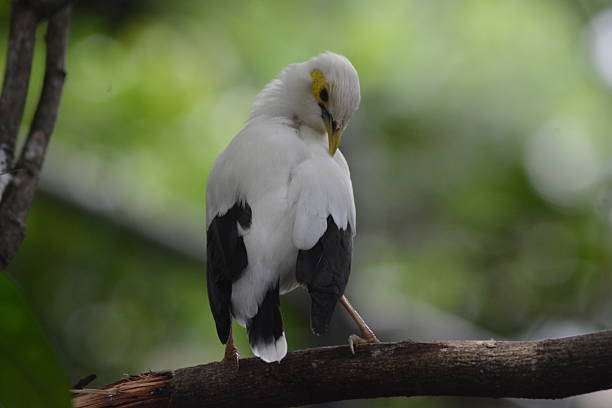
Fifth, bird activity brings about a dual flow of information and matter.
Birds are not only predators of pests, but also important “transporters” in the ecosystem. During their activities, birds carry plant seeds, pollen, and even microorganisms between different areas.
Bird bathing encourages frequent bird visits, making the garden a convergence point for this ecological information. Some plants that wouldn’t normally appear naturally in a garden may quietly take root through bird dispersal. This increases the diversity of plant structure and makes the ecological hierarchy more complex.
At the same time, bird droppings also provide additional nutrient input to the soil. This input, though not drastic, is extremely continuous and has a positive impact on the microbial community and soil health.
VI. The presence of a water source makes the garden ecosystem more resilient.
Ecological balance does not mean static or unchanging, but rather the ability of a system to recover its stable state after being disturbed. This ability is known as ecological resilience.
bird bathing at this level is often severely underestimated. Gardens with stable water sources are better able to maintain their basic ecosystem functions during droughts, extreme heat, or short-term resource shortages.
Birds don’t easily leave, insect populations don’t suddenly collapse, and plants can weather stress periods in a relatively stable environment. This buffering effect makes the garden ecosystem less sensitive to short-term environmental changes.
In the long run, this resilience is the key to maintaining ecological balance.
VII. Bird bathing changes not only the number of species, but also their behavioral patterns.
Ecological change is not always reflected in “more,” but often in “different.” When water sources are stable, the behavioral patterns of organisms will undergo subtle adjustments.
Birds change their activity patterns, appearing more frequently during the day. Insects adjust their feeding and breeding areas around water sources. Even some small mammals may quietly visit at night.
These significant behavioral changes have transformed the garden, which originally had only a single function, into an ecological stage with a unique diurnal rhythm and multi-layered interactive patterns. Within this ecological stage, the garden is no longer a simple space with a single function, but rather a place that displays a rich and diverse ecological landscape under the passage of time and the activities of various organisms.
Different species cleverly stagger their activity in time and space to utilize various resources. They avoid competing for limited resources at the same time and place, effectively reducing direct conflict through this strategic staggering. This optimized resource utilization further enhances the overall stability of the garden ecosystem, allowing the garden’s ecological environment to develop more harmoniously and orderly.
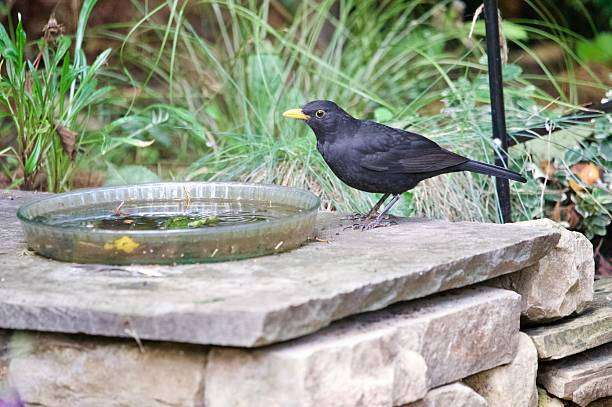
8. The transformation of human roles is also part of ecological balance.
As the garden ecosystem begins to evolve around bird bathing , the human role within it also changes, gradually shifting from initial designers to observers and maintainers.
This shift itself will, in turn, affect the ecosystem. People are more willing to reduce chemical interventions and pay more attention to water cleanliness and environmental safety. These behavioral choices will further enhance the eco-friendly nature of gardens.
Ecological balance is not a process completed unilaterally by nature, but rather the result of human choices and natural responses. Bird bathing is precisely an important medium that facilitates this interaction.
9. From single-point facilities to system-level impact
If we consider bird bathing as a standalone facility, its significance seems limited. But once placed within the context of an ecosystem, it becomes more like a trigger.
Bird baths alter water availability, which in turn changes bird behavior, further influencing insects, plants, microorganisms, and even human decision-making. This cascading effect gives a small device system-level ecological value.
True ecological balance is never achieved through grand projects, but rather through a series of seemingly small but correct choices that are gradually established.
Conclusion: Ecological change often begins in the most inconspicuous places.
Bird baths may seem like an insignificant feature in a garden, but their ability to alter the ecological balance stems from their intervention in the most fundamental yet crucial resource level of the garden ecosystem. Water is an indispensable resource in a garden’s ecosystem, and bird baths provide it. The presence of water is of paramount importance. Like a powerful magnet, it attracts various life forms to linger in the garden. Birds come to drink and play, and insects may stop to find water. With life present, relationships are established between different organisms.
Birds and insects may form predator-prey relationships, and different birds may compete or cooperate. These established relationships act like power to the intricate machine of the garden ecosystem, allowing it to function smoothly. Plants expand their range thanks to birds spreading seeds, and insects help with pollination, resulting in a vibrant and thriving garden ecosystem.
When we truly understand the impact of bird bathing, using water as a medium, on garden ecology, it becomes clear that a garden ecosystem cannot be achieved simply by piling on various elements. Many people might think that placing more pretty stones and planting more different kinds of flowers in the garden will create a perfect garden ecosystem. But this is not the case. Building a garden ecosystem requires a deep understanding of the needs of life.
Different organisms have different requirements for water, food, habitat, etc., and we must plan the garden rationally according to these needs. At the same time, we must respect the logic of nature. Nature has its own set of operating rules, such as the reproduction of organisms and the balance of the food chain, and we cannot violate these rules to forcibly change the garden ecosystem.
A bird bath, from its appearance, may seem very simple, lacking elaborate design and complex functions. However, a bird bath can be the watershed moment that transforms a garden from a mere “decorative space” into a true “ecosystem.” Before a bird bath, a garden might simply be a beautiful place for people to admire, with its plants and landscaping serving only a decorative purpose. But with a bird bath, and the introduction of water as a key resource, the garden gains vitality, various organisms begin to thrive, forming a complete ecosystem, thus realizing the transformation from a purely decorative function to one with ecological functions.
FAQ
1. What is the most easily overlooked design problem of a bird bath tub for beginners?
Stability. Even a slight wobbling can make birds feel threatened and cause them to give up using it.
2. Does a deeper water in a bird bath attract more birds?
Quite the opposite. Most garden birds only need shallow water to bathe. Deep water can frighten smaller birds and even pose a safety risk.