If you choose the wrong height for your bird bath, birds might never visit it! Here are 10 tips.

Bird baths are an integral part of a garden ecosystem, providing birds with places to drink and bathe, attracting a variety of birds, and bringing vitality and biodiversity to the garden. However, many novice gardeners overlook a crucial factor when setting up bird baths —height. An inappropriate height can make birds feel unsafe, reduce usage, or even cause them to stop visiting altogether.
Birds are extremely sensitive to their sense of security and visibility in their natural environment; any arrangement that doesn’t conform to their habits may be rejected. This article will combine ecological research, avian behavior, and practical case studies to analyze ten key tips for choosing the height of a bird bath , helping gardeners to scientifically design bird baths and attract more birds.
Birds’ sensitivity to altitude
Birds instinctively assess safety and risk in their natural environment. When searching for drinking and bathing sites, altitude becomes a crucial factor in deciding whether to approach. Low-lying locations expose birds to threats from ground predators such as cats, snakes, and small mammals, and are also more susceptible to disturbance from human activity. Conversely, excessively high bird baths can increase the difficulty of flight for small birds, causing discomfort or even injury during landing and takeoff.
Studies show that most garden birds prefer a height of 30 to 120 centimeters above the ground, a range that balances safety and maneuverability. Too low a height increases the sense of risk, causing birds to become more wary and hesitant to approach; too high a height may cause smaller birds to avoid the area due to stamina or flight angle. This also explains why some seemingly perfect bird baths remain unused in gardens.
Tip 1: Consider the bird’s size and flight ability
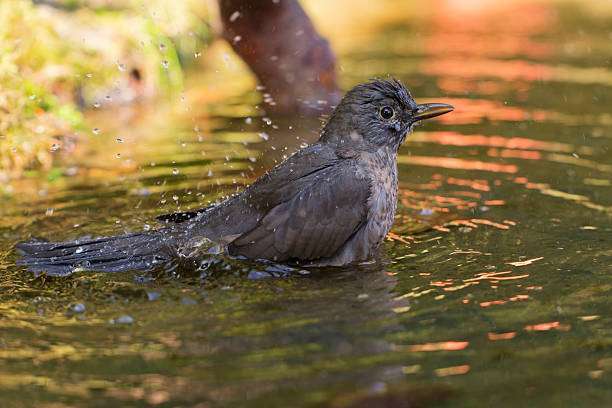
Different bird species exhibit significant differences in size, flight ability, and behavior. Larger birds such as crows, magpies, and pigeons can easily adapt to higher bird bathing positions , while smaller birds such as sparrows, tits, and robins are better suited to lower locations. When choosing a drinking and bathing spot, birds comprehensively assess their flight path, available space, and safe escape route.
A real-world example clearly illustrates this: in a community garden inhabited by various bird species, there was a bird bath that was originally placed 180 centimeters above the ground. For a long time, this pool was almost completely ignored by birds, especially smaller ones, who actively avoided this bird bath as a water source.
Later, the staff adjusted the setup of the bird bath, first lowering the pool to just 50 centimeters above the ground, and then adding some low shrubs around it. After these adjustments, the situation changed significantly; small birds visited the pool much more frequently. This entire process clearly demonstrates that the size of the birds and their flight capabilities are key considerations when choosing the altitude of water sources and related locations.
Tip 2: Consider the surrounding vegetation layout
a bird bath must be chosen in harmony with the surrounding vegetation. Low shrubs and shrubs provide cover and escape routes, increasing birds’ sense of security when using the water. If the bird bath is too low and lacks cover, small birds may not dare to approach it at all. Conversely, if the pool is placed too high and there are no branches or support points nearby for birds to land on, birds will feel unsteady when landing and taking off, reducing their willingness to use it.
By scientifically arranging vegetation and bird bath heights, safe environments can be created at different levels. For example, planting low shrubs next to a pool at a height of 50 centimeters provides hiding places and escape routes for small birds; while setting up branches or supports next to a pool at a height of 120 centimeters provides stable perching positions for larger birds. This combination of high and low arrangements can simultaneously meet the needs of various bird species, increasing overall visitor rates.
Tip 3: Consider the threat of predators
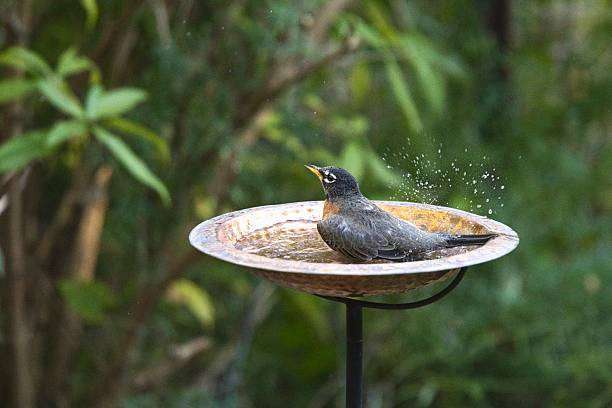
Birds’ choice of roosting and activity altitude is actually closely related to the predator threats they face. In nature, various predators exist on the ground, such as agile and ambush-prone animals like cats, the flexible and stealthy bodies of snakes, and certain mammals with strong hunting abilities. These ground predators pose a significant threat to bird bathers in low-lying locations.
Because at low altitudes, birds are more easily spotted and captured by these predators, their movement range is relatively limited, and they find it difficult to quickly escape the predator’s pursuit. Similarly, predators in the air also threaten bird safety, such as birds of prey with powerful flight capabilities and sharp eyesight like eagles, and birds like owls with excellent nocturnal hunting abilities.
Their presence may affect the sense of security of birds at higher altitudes; after all, while they may avoid ground predators at higher altitudes, they are more exposed to the sight of these aerial predators.
Driven by the instinct for survival, birds carefully weigh and choose relatively safe locations for activities such as drinking and bathing, aiming to minimize their risk of being preyed upon. They rely on their experience and perception to assess the safety of different altitudes, making choices that are beneficial to their survival.
Practical observations revealed a remarkable change after adding low shrubs and hiding places near a certain low-lying bird bath. The frequency of small birds visiting this bath increased significantly, by nearly 70%. This phenomenon clearly demonstrates that birds must comprehensively consider the risks posed by predators when choosing the height to use their bird baths. Considering only height or only the risk of predators is insufficient; only by combining both can a truly relatively safe environment be provided for birds.
When the bird bath is at an appropriate height and surrounded by vegetation for cover, birds feel significantly safer using it. This sense of security allows them to linger near the bird bath more readily, engaging in activities such as drinking and bathing, thus increasing their frequency of use. In this environment, they can avoid threats from ground predators and also reduce their chances of being spotted by aerial predators, making them more willing to use the bath.
Tip 4: Observe bird behavior patterns
Bird behavior patterns are an important basis for choosing the height of a bird bath . By observing birds’ foraging and drinking behaviors in their natural environment, their preferred height range can be understood. Birds usually choose locations with open views and easy retreat. Garden owners should record the frequency of bird visits, the duration of stay, and their height preferences, and arrange the bird bath accordingly .
Case studies show that in a garden, adjusting the bird bath height from 80 cm to 60 cm nearly doubled the time small birds spent there, and the frequency of visits also increased significantly. This indicates that adjusting the height based on actual bird behavior can significantly improve utilization.
Tip 5: Indirect impacts of altitude on water quality safety
a bird bath not only affects a bird’s sense of security but also indirectly impacts water quality. Low-lying areas are easily contaminated by soil, fallen leaves, and rainwater, increasing the accumulation of germs and sediment; excessively high areas may cause the water basin to wobble or tip over, affecting water stability. Choosing an appropriate height balances safety and water quality management, reduces the risk of germ transmission, and ensures birds can drink and bathe in a comfortable environment.
Scientific experiments have shown that in low-lying ponds , the number of bacteria in the water increases rapidly during the hot summer months, while the water quality in bird baths at a moderate height with stable support is more stable. This indicates that height is closely related to water quality management and is an important factor in ensuring the health of birds.
Tip 6: Consider lighting conditions
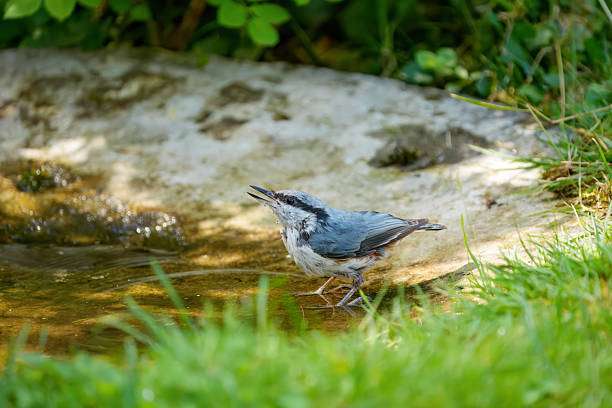
Birds are sensitive to light, especially in the early morning and evening, when it is a crucial time for them to drink and bathe. The height of the bird bath should be adjusted according to the angle of the light so that birds can receive warm sunlight without being uncomfortable from direct, strong light. Too high or too low a height can lead to uneven lighting and discourage birds from using it.
In a detailed observational study of a community garden, researchers conducted a special operation to investigate the impact of environmental factors on bird bathing behavior. They found that the birds did not visit the pools that were originally placed in a low-light area as expected. Therefore, after careful consideration, the researchers moved the pools from the low-light area to a location with more even lighting and appropriate shade.
After a period of observation and statistics, a surprising result emerged: the visitor rate to the pool increased by nearly 50% compared to before. This significant change clearly demonstrates that setting the bird bath at a reasonable height, combined with scientific lighting adjustments, can significantly increase the frequency of bird use.
Tip 7: Stability and Safety
The height of the bird bath must be chosen in conjunction with stability. A high position without stable support can easily cause birds to tip over or wobble, increasing the risk of injury. A stable design includes a weighted base, non-slip supports, and appropriate securing methods. Scientifically arranging the height to make birds feel safe while using the water is a key factor in maximizing its usability. Stability and height together determine the usability and durability of the bird bath .
Tip 8: Dispersed layout increases customer traffic.
ponds at different heights in the garden can meet the needs of different bird species. Dispersed placement not only increases the amount of available water but also reduces competition and close contact among birds, lowering the risk of disease transmission. By combining ponds at varying heights and in multiple locations, the needs of different bird groups can be met, increasing overall visitor rates and making the garden ecosystem more vibrant.
Tip 9: Seasonal Adjustment of Height
Seasonal changes can affect bird size, range, and behavior. Birds are less active in winter and may prefer low, safe water sources; while they are more active in summer and may choose higher, more open locations. Garden owners can adjust the height of the pool according to the season , increasing flexibility and ensuring birds visit year-round. At the same time, seasonal adjustments help maintain water quality and prevent the accumulation of pathogens, improving the long-term safety of bird baths .
Tip 10: Continuous observation and optimization
a birdbath is not a one-time decision, but a continuous optimization process. Garden owners should regularly observe bird visits, recording usage frequency, preferred heights, and dwelling behaviors, and dynamically adjust the height based on environmental changes and plant growth. Through scientific recording and practical optimization, the most suitable height configuration for the garden ecosystem can be gradually found, ensuring the birdbath maintains high utilization and becomes an important part of the garden’s ecosystem.
Comprehensive Recommendations and Conclusion
a birdbath is crucial to bird visitation behavior. Factors influencing bird usage include size differences, flight ability, vegetation cover, predator threat, water quality safety, lighting conditions, stability, dispersed placement, seasonal changes, and continuous observation.
Scientifically arranging the height of a birdbath not only increases utilization but also optimizes the garden ecosystem, increasing bird diversity and overall vitality. By mastering these ten tips, garden owners can create a safe and comfortable pool environment that attracts frequent bird visits, bringing vitality and natural harmony to their gardens.
the bird bath is not merely a decorative element, but a crucial aspect concerning bird safety and ecological balance. Every visit from birds affirms the scientific arrangement and reflects the garden’s ecological health. Through scientific planning and continuous optimization, the bird bath can become a favorite natural feature in the garden, adding vitality, enriching biodiversity, and allowing every garden owner to experience the beauty and harmony of nature.
FAQ
1. Can birds completely abandon a bird species due to a single unsafe experience?
Possibly. Birds are very sensitive to memories of danger; a single fall or fright can lead them to avoid birds for a long time.
2. Is it suitable to place a bird bathing tub on a high platform or balcony?
Yes, but you must ensure that the height, stability, and escape routes are in line with the habits of birds.