Water quality is crucial for bird bath: 5 maintenance guidelines.

Bird baths are an integral part of a garden ecosystem, providing birds with places to drink and bathe, and indirectly influencing the garden’s biodiversity and ecological balance. However, many novice gardeners often overlook the importance of water safety when setting up bird baths .
Water quality issues not only reduce bird usage but can also pose a risk of disease transmission. Scientific research and practical experience show that ensuring clean and safe water in bird baths is key to attracting birds long-term. This article will provide a detailed guide on how to maintain safe water quality in bird baths , helping garden owners create a healthy, safe, and vibrant bird paradise.
Why is water quality safety the most critical?
Birds are extremely sensitive to water quality. In their natural environment, they judge the safety of water sources through sight, smell, and behavior. If the water is murky, dirty, or has an unpleasant odor, birds will instinctively avoid it, thus affecting the frequency of bird bathing . Poor water quality not only affects birds’ drinking and bathing but can also lead to the spread of diseases. For example, the growth of bacteria, parasites, and algae can easily spread among birds, causing feather damage, digestive system diseases, and even death. Therefore, maintaining safe water quality is a crucial factor that must be considered before setting up a bird bath .
Water quality safety is directly and closely related to the daily behavior and health of birds. For birds, clean water is like a life-giving spring, allowing them to drink and bathe without worry. Drinking freely from clean water meets their body’s hydration needs and maintains normal physiological functions; a pleasant bath keeps their feathers glossy.
Glossy feathers not only reduce air resistance during flight but also provide good insulation in cold weather, ensuring normal body temperature regulation. Normal body temperature regulation is crucial for bird survival, allowing all organs to function optimally and promoting reproductive and foraging behaviors. Reproduction is key to the continuation of the species, and a healthy body helps birds successfully reproduce; good foraging behavior ensures they obtain enough food to sustain their survival and development.
Water quality safety encompasses more than just physical cleanliness. From a more comprehensive perspective, it also includes the crucial factor of suitable water temperature. A suitable water temperature ensures birds feel comfortable when in contact with the water source, preventing adverse effects from excessively high or low temperatures. Furthermore, water quality safety requires the absence of harmful chemicals in the water. Harmful chemicals, once ingested by birds, can trigger various diseases and seriously threaten their health.
In addition, a stable ecological environment is also an important component of water quality safety. A stable ecological environment ensures the continuous cleanliness and ecological balance of the water source, providing a good living space for birds. Therefore, scientifically managing water quality is a vital safeguard for the health of a garden ecosystem. By monitoring and regulating water quality using scientific methods, a suitable garden ecological environment for bird survival can be created, allowing the garden to be full of vitality.
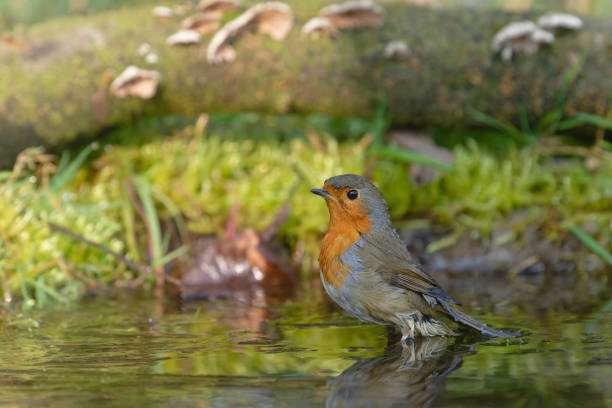
Maintenance Guideline 1: Change the water source regularly
Regularly changing the water is the most basic way to keep bird bath water clean. After birds use the water bowl, feathers, dust, food scraps, and bird droppings may remain in the water. If not changed for a long time, the water quality will deteriorate rapidly. It is recommended to change the water daily or every two days during the hot summer months; in the cooler seasons, change it every two to three days to keep the water clean. When changing the water, use clean tap water and avoid using water containing chemical additives to ensure the birds’ safety.
Regularly changing the water not only keeps the water clean but also slows down the growth of bacteria and algae, reducing the risk of disease transmission. At the same time, the process of changing the water source also provides an opportunity to observe bird habits; garden owners can record bird frequency, species, and behavior, providing data support for ecological management.
Maintenance Guideline 2: Clean the bird bath regularly
Besides changing the water source, regularly cleaning the bird bath is equally important. Algae, sediment, and organic debris easily accumulate at the bottom and edges of the water basin. These deposits not only affect the appearance but also serve as a breeding ground for germs and parasites. When cleaning, use warm water and a soft brush to gently remove dirt. Avoid using chemical cleaners or bleach, as residues can harm the birds. It is recommended to perform a thorough cleaning once a week, adjusting the frequency according to the season and usage.
A thorough cleaning process not only makes the bird bath look brand new, but also greatly helps garden owners to fully check the condition of the bird bath. This includes carefully checking whether the bird bath is stable, that is, to make sure it is placed stably and will not wobble or tip over due to slight external force; checking whether the base is loose, that is, to check whether the connection between the base and the main body of the pool is tight, without any gaps or signs of wobbling; and carefully checking the water basin for cracks or damage, even the smallest cracks may gradually widen over time and affect the normal use of the water basin.
After the bird bath maintenance is complete, clean water needs to be refilled. This water must be free of impurities and contaminants, and at a suitable temperature to provide a good living environment for the birds. After this process, the bird bath will be fully restored to its optimal condition. This ensures the safety of the birds that come here, so that they can drink and bathe without worrying about accidents, allowing them to drink and bathe comfortably and peacefully.
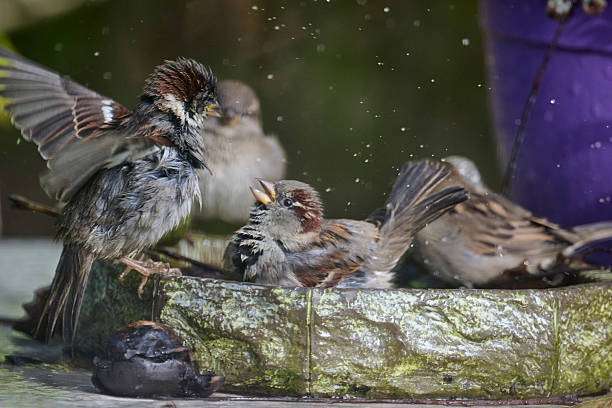
Maintenance Guideline 3: Control Water Depth and Temperature
Water safety depends not only on cleanliness but also on water depth and temperature. Water that is too deep will deter small birds, while water that is too shallow will not meet the bathing needs of larger birds. It is recommended to adjust the water depth according to the size of common bird species, allowing them to stand and immerse themselves safely. Water that is too hot or too cold will also affect bird use. In hot summer weather, provide shade around the water basin to prevent the water from becoming too hot; in cold winter weather, prevent the water from freezing to ensure that birds have suitable drinking and bathing conditions year-round.
Properly controlling water depth and temperature not only improves water resource utilization but also prevents water quality deterioration due to high-temperature evaporation or low-temperature freezing. Scientific water depth design combined with temperature management is an effective means of ensuring water quality safety and bird comfort.
Maintenance Guideline 4: Prevent Pollution and External Interference
The overall environment surrounding a bird bath significantly impacts its water quality. To ensure good water quality, the bath should be avoided in areas prone to leaf littering, soil runoff, or fertilizer seepage, as this effectively reduces the entry of external pollutants into the bird bath. Planting vegetation around the bird bath is beneficial, as it provides necessary shelter for birds, making them feel safer while using it. However, regular cleaning of fallen leaves and other debris is necessary, as these will accumulate and decompose, polluting the water if not removed promptly.
At the same time, we should take measures to prevent domestic cats, dogs, or other pets from frequently disturbing the bird bath. When these pets frequently approach the pond , they are likely to bring bird droppings or mud into the water, thus affecting water quality. By strictly controlling environmental pollution around the bird bath, garden owners can maintain a relatively stable water quality in the pond . Stable water quality is very attractive to birds and can effectively increase their usage of the pond .
In addition, we need to pay special attention to the design of the water basin and the smoothness of its edges. If the water basin is poorly designed or has uneven edges, mud, sand, or debris can easily be washed into it by rainwater. Therefore, we should choose a well-designed water basin with smooth edges. Furthermore, a well-planned layout of the garden’s ecosystem is also crucial.
We can combine planting some shrubs and low branches to provide shelter for the bird bath. This will not only increase the birds’ sense of security when using the pool , making them feel more at ease, but also help maintain the cleanliness of the water in the bird bath in the long run, providing a good bathing environment for the birds.
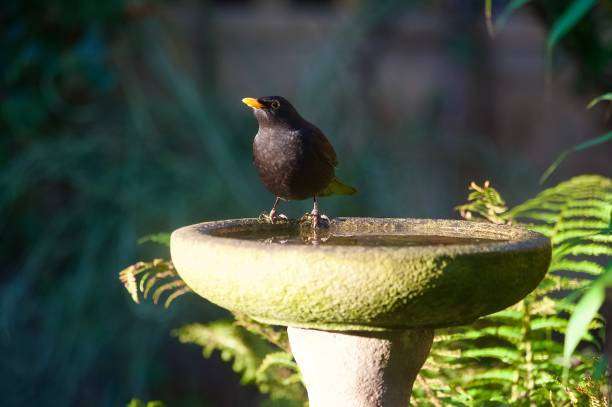
Maintenance Guideline 5: Monitoring and Long-Term Maintenance
Water quality safety is a long-term management process that requires continuous observation and adjustment. Garden owners should regularly monitor water quality, including water color, odor, and the presence of floating debris. If any abnormalities are detected, the bird bath should be replaced and cleaned immediately . Furthermore, the frequency of water changes and cleaning should be adjusted according to seasonal changes, bird usage frequency, and the garden environment. Long-term monitoring not only ensures water quality safety but also helps garden owners understand bird behavior patterns, optimize their garden layout, and increase bird visits.
Scientific monitoring combined with long-term maintenance can keep bird bath in optimal condition and create a stable ecological interaction. By regularly recording bird usage, seasonal changes, and water quality, garden owners can establish a comprehensive management plan to ensure that bird baths function effectively in the long term, providing birds with a safe and comfortable drinking and bathing environment.
Comprehensive Strategy and Conclusion
Maintaining safe water quality for bird baths is crucial for attracting birds. By regularly changing the water source, cleaning the pool , controlling water depth and temperature, preventing contamination, and through continuous monitoring and maintenance, garden owners can provide birds with a safe, comfortable, and healthy place to drink and bathe. Safe water quality not only increases bird activity but also reduces the risk of disease transmission and promotes ecological balance and biodiversity in the garden.
By scientifically maintaining water quality and employing strategies such as a stable design, appropriate water depth, and early morning use, the ecological value of a bird bath can be maximized . Every visit from birds to the garden affirms the safety of the water quality and the scientific nature of the arrangement, while bringing vitality and natural harmony to the garden. Master these five maintenance guidelines, and your bird bath will become a core feature of your garden’s ecosystem, allowing birds to roam freely in a safe and comfortable environment, adding boundless vitality and charm to your garden.
FAQ
1. Will birds abandon the facility because of frequent human activity?
Yes. Frequent disturbance will make birds perceive the environment as unsafe, causing them to stay away.
2. Is it appropriate to place the bird bathing basin in the same location as the bird feeder?
It is not recommended. Separating them is more in line with the logic of bird safety considerations.