4 principles for pairing a bird bath with a garden style: Choosing the wrong overall design will ruin the effect.

The bird bath in the garden is not only a water source, but also a design element.
In modern garden design, bird baths are often simply understood as facilities that provide birds with water or a place to wash their feathers. However, upon closer inspection, bird baths are not merely about ecological services; they also serve as visual focal points, organize space, and harmonize the landscape.
How can a basin of water in a garden both serve birds and become an integral part of environmental harmony? This is a long-neglected yet crucial design question.
A bird bath in a garden can influence birds’ willingness to approach it, and also affect the visual coherence and functionality of the entire landscape. Ignoring this aspect can render even the highest quality water features ineffective, failing to attract birds or add any vitality to the garden.
In design practice, people often focus only on a single element, such as choosing a beautifully shaped bird bath or selecting a bright color, while neglecting its harmony with the overall style of the garden. As a result, birds may avoid the garden due to discomfort, and the overall aesthetic appeal and ecological value of the garden are greatly diminished.
Therefore, mastering the principles of matching the garden style is a prerequisite for making a bird bath truly effective.
Principle 1: Maintain consistency with the garden theme.
Garden designs typically revolve around a specific theme, such as Japanese Zen, English country, modern minimalism, or tropical rainforest style. Bird bath designs need to align with these themes to achieve visual and psychological harmony.
Choosing a discordant bird bath, even with excellent materials and functionality, will disrupt the overall landscape unity and create a sense of unease for both people and birds.
In a garden, specific bird bath designs can align with various themes:
- In a Japanese Zen garden, bird baths should emphasize natural materials and understated designs, such as shallow stone basins or antique-style terracotta basins, echoing the surrounding pebbles, moss, and bamboo.
- English country gardens can opt for soft-colored, naturally textured ceramic or wooden bird baths, creating visual continuity with the lawn and flowers.
- Modern minimalist styles tend towards simple lines, monochromatic tones, and understated materials, making the bird bath an accent rather than a striking element.
- Tropical rainforest styles can choose natural stone or wood-look bird baths, paired with tropical plants to create a humid and natural atmosphere.
This stylistic consistency not only makes the garden visually more harmonious but also makes it easier for birds to approach.
The naturally harmonious design reduces birds’ wariness, making them see the bird bath as a safe water source rather than an obtrusive element.
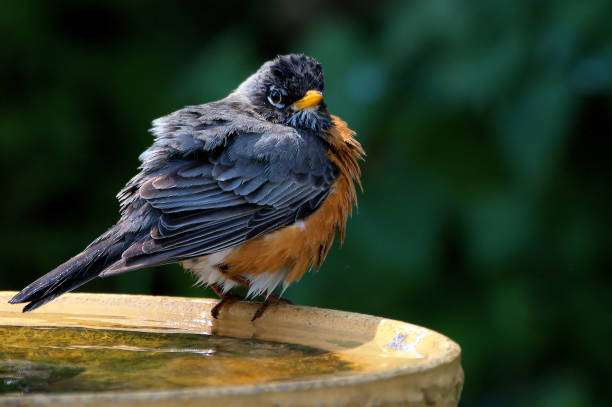
Why does similarity in style affect bird approach?
Birds assess the safety of their environment when foraging for water and food. Incongruous or jarring colors in visual elements can trigger a sense of potential threat, causing birds to stay away.
A bird bath that aligns with the environmental theme provides psychological comfort, is easier for birds to use, and fosters a more natural interaction within the garden’s overall ecosystem.
Principle Two: Location Layout and Sight Guidance
A bird bath requires consideration of both functionality and aesthetics. Simply placing it in the most prominent position is not always the best choice.
Birds need some shelter and observation space, and the garden layout also needs to balance visual focus with the overall flow of movement.
The ideal location should consider the birds’ sense of security and visual guidance within the garden. Proximity to bushes or low shrubs can provide temporary cover and a quick escape route for birds near water sources.
Placing a bird bath in an open area in the center of the garden may enhance visual appeal, but it can also increase stress for birds and reduce its frequency of use. To balance visual appeal, light-colored stones or plant lines can be used in open areas to create a visual focal point without making birds feel exposed.
Sight guidance also impacts the human experience. As a landscape feature, the bird bath should create visual continuity with garden paths, seating areas, or viewpoints. A well-planned sightline layout allows people to observe bird activity without disturbing the birds, enhancing the garden’s interactivity and ecological educational value.
Hidden problems caused by improper layout
An improper layout not only deters birds but can also lead to frequent water pollution or abnormal water temperatures. Proximity to highly polluted areas, such as composting sites or locations exposed to direct sunlight, can easily deteriorate water quality and cause excessively high water temperatures, reducing birds’ willingness to use the bird bath.
Optimized layouts can achieve a balance between functionality and aesthetics, making the bird bath a truly important element of the garden’s ecology and landscape.
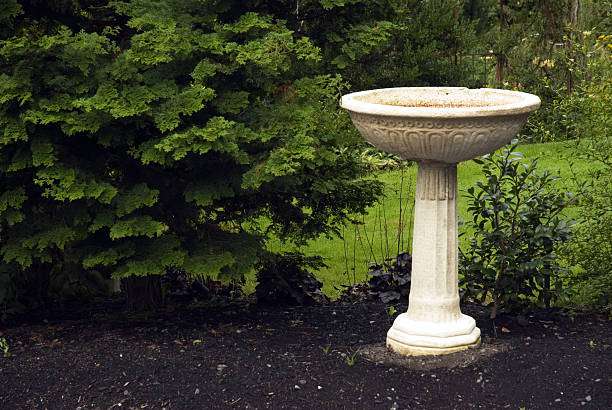
Principle Three: The material should harmonize with the surrounding environment.
A bird bath is crucial for style compatibility, as it also affects durability and eco-friendliness. Natural materials such as stone, terracotta, or wood not only visually blend into the garden style but also provide comfort in terms of temperature and touch.
Untreated metal or plastic materials may be too shiny or reflective, which can be off-putting to birds and reduce the frequency of use.
Material selection should consider its harmony with the surrounding garden environment:
- Stone bird baths are suitable for Japanese Zen or natural styles, forming a cohesive landscape with rocks, water features, and moss.
- Ceramic or wooden basins are suitable for English country and tropical gardens, with natural colors and soft edges to reduce bird alertness.
- For a modern minimalist style, brushed metal or monochrome ceramic can be used to maintain clean lines and unify with the garden’s architectural style.
The material also affects the bird’s comfort and ecological safety. Surfaces that are too hot or too slippery can cause stress for birds.
Rough or slightly textured materials increase grip and a sense of security, allowing birds to move naturally when preening or drinking, thus improving the efficiency of the bird bath function.
How do materials complement each other to support ecological functions?
The harmony between materials and the environment is not only an aesthetic issue, but also affects water temperature, light reflection, and a sense of security. For example, light-colored terracotta basins can reflect some sunlight, preventing the water temperature from becoming too high; stone materials have a high heat capacity, resulting in more stable water temperatures; and frosted wood or terracotta surfaces reduce light reflection, alleviating visual stress for birds.
This choice of materials subtly increases bird utilization and the fulfillment of ecological functions.
Principle Four: Proportion and Landscape Layering
A bird bath must be in harmony with the overall proportions of the garden. A bird bath that is too large or too small will affect visual balance and functionality.
A bird bath that is too small may not be able to accommodate multiple birds at the same time, affecting their social and ecological interactions; a bird bath that is too large will appear out of place in a small garden and may also increase the difficulty of water quality management.
Height design is equally important. The height of the bird bath should take into account the birds’ water-finding habits and sense of security, while also echoing the height of the surrounding vegetation, the layers of flower beds, the stacking of stones, or the line of sight from the seating.
A reasonable proportion and sense of layering can make the bird bath a natural extension of the landscape element, while also meeting ecological functional requirements.
The creation of a sense of layering not only affects visual aesthetics but also the psychology of birds. A multi-layered landscape structure provides birds with observation and refuge paths, making them feel safe near water sources.
A well-proportioned bird bath visually integrates into the environment and functionally serves the birds, truly realizing the dual value of a garden in terms of both ecology and aesthetics.
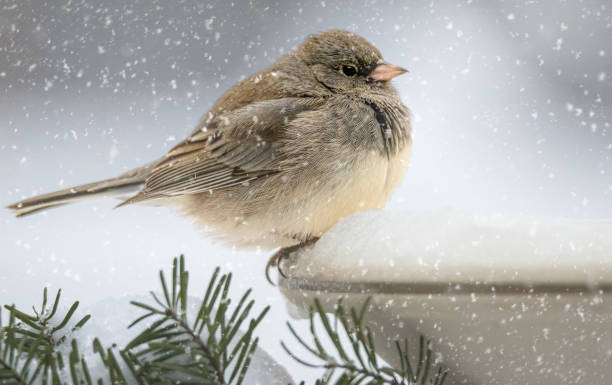
The Importance of Layering in Ecological Interaction
A layered garden can guide bird activity paths, make water use more efficient, and enrich the garden’s ecological interactions. For example, a combination of low vegetation, bird baths, and viewing paths can attract different species of birds to different levels, increasing the garden’s biodiversity.
An inappropriate proportion, however, can disrupt this natural interaction and reduce overall ecological efficiency.
The value of integrated design
A bird bath is not merely a single feature, but a node within the garden’s ecosystem and landscape system. Through consistent style, appropriate location, harmonious materials, and optimized proportions, a bird bath can truly become a fusion of ecological function and landscape aesthetics.
Choosing the wrong principle in any of these areas can render the entire water feature worthless, failing to attract birds or enhance the overall charm of the garden.
A well-planned combination can increase bird utilization rate and support their ecological functions such as thermoregulation, water intake, and feather grooming. At the same time, it can enhance the garden’s aesthetic value, allowing humans to enjoy the scenery without disturbing the birds’ daily activities, thus achieving a harmonious coexistence between humans and birds.
Conclusion: The overall combination determines the success or failure of a function.
The ecological and aesthetic value of a bird bath ultimately depends on its compatibility with the overall style of the garden. Focusing solely on materials, shapes, or colors while neglecting the overall environment often leads to functional failure.
The four principles of consistent style, rational layout, complementary materials, and harmonious proportions are key to ensuring a bird bath truly functions effectively. Only through holistic consideration can a garden be both aesthetically pleasing and a pleasant ecological space for birds to approach and use.
FAQ
Is a birdbath best viewed in the center of the garden?
Not necessarily. While a central location offers a prominent view, birds may feel exposed and insecure. A birdbath closer to vegetation or a sheltered area is more advantageous for birds, while still allowing them to be observed through landscaped paths.
How much does the material of a bird bath affect bird use?
The material affects the grip, water temperature stability, and light reflection, directly impacting the bird’s comfort and psychological safety, thus affecting the frequency of use.
How to determine the appropriate proportion between the bird bath and the garden?
Consider the species and number of birds, the size of the garden, and the height of the vegetation to choose a size and height that meets the needs of the birds without disrupting the overall visual hierarchy and style.