3 common mistakes when choosing bird bath colors: Choosing the wrong color can scare away birds.
The Hidden Impact: A Bird Bath’s Color and Its Survival
In many garden design and bird watching guides, bird baths are often described as water sources or decorations, with color considered merely an aesthetic matter.
However, for birds, color selection is far from trivial; it directly affects whether they are willing to approach the bird, how frequently they use it, and even their survival and reproduction.
Birds’ visual systems differ significantly from humans. They can perceive ultraviolet light and exhibit natural preferences or alertness towards specific colors.
Incorrect color selection can mislead birds into perceiving a potential threat or unsafe environment, causing them to avoid bird baths that should provide safe water. This behavioral response can have serious consequences in urban environments or during dry seasons, increasing the risk of heat stress and dehydration.
Understanding birds’ perception of color and their psychological responses is the primary prerequisite for designing a bird bath.
Different colors convey different information, and this information is more important to birds than to humans in terms of aesthetic meaning. Many seemingly minor color discrepancies can significantly diminish the value of the entire basin of water.
Myth 1: Overly Bright or Saturated Colors Will Scare Away Birds.
Many designers believe that bright colors are more likely to attract human attention and make bird baths a focal point in the garden.
However, for birds, overly bright or saturated colors, especially red, bright blue, or fluorescent colors, are often seen as warning signs or unusual presences in the natural environment.
In the wild, red is often associated with predators, danger, or territorial warnings from other birds.
Bright blue in open environments may be mistaken for unusual water reflections or potential threats. Fluorescent colors, due to their vividness and unnaturalness, will strongly alert birds, causing them to avoid approaching.
This vigilance is not meaningless; it stems from a survival strategy that birds have evolved over a long period.
In hot or water-scarce environments, excessive vigilance forces birds to forage long distances or search for alternative water sources, increasing energy consumption and the risk of dehydration.
Therefore, a misjudgment in color selection can have effects beyond temporary discomfort, potentially leading to substantial survival stress.
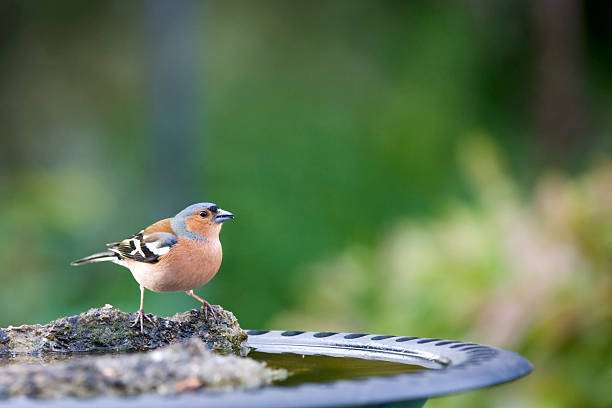
Why Are Bright Colors Visually Misleading?
The density and type of photoreceptor cells in a bird’s retina make it extremely sensitive to specific wavelengths of light.
Colors that humans perceive as soft may appear too bright or shimmering to birds. Conversely, colors that humans perceive as “bright” may signify alertness, abnormality, or instability.
This visual misdirection is particularly noticeable in garden environments. The background colors in gardens are relatively balanced, with green, brown, and soft earth tones dominating.
Bright bird baths often create a jarring contrast against this background, triggering the birds’ instinctive avoidance response.
Therefore, when designing a bird bath, we must not only consider human aesthetics, but also take birds’ perception as the standard, and choose natural, soft colors that are in harmony with the environment in order to truly achieve high frequency of use and safety for birds.
Myth 2: Completely Transparent or Glass Materials Make Birds Feel Unsafe.
Many families choose transparent or glass bird baths, believing the transparent design is aesthetically pleasing and allows for a clear view of the water level.
However, birds have a natural aversion to transparent objects. They may not be able to accurately judge the boundaries of the water, or may mistake it for an open gap, thus creating a sense of insecurity.
Transparent materials, when refracted, produce visual shimmering and reflections, especially in direct sunlight.
Birds have extremely sensitive eyes to movement and light, and these reflections and refractions can be mistaken for moving threats or the silhouette of predators, causing them to avoid approaching.
Furthermore, glass or transparent plastic can retain heat in hot environments, raising the water temperature.
When birds approach, they may sense excessive heat on the water surface or abnormal light reflections, and their inability to form a clear sense of boundary further reduces their willingness to approach.
This misconception shows that visual transparency does not equate to natural visibility; rather, it increases the psychological burden on birds.
A comprehensive consideration of color and material is key to designing a safe and comfortable bird bath.
Psychological Differences Between Transparent and Opaque Materials
Birds need to quickly assess safety and availability while foraging for food and water.
Clear boundaries, stable colors, and moderate contrast help birds make quick decisions, while transparent or smooth reflective surfaces often increase decision-making time and risk perception.
Prolonged exposure to high temperatures or drought can cause birds to abandon water sources due to psychological stress, further exacerbating their dehydration risk.
It can be said that transparent materials not only affect aesthetics but also directly impact physiological safety and behavioral patterns.
Myth 3: Monochromatic Selection Ignores Environmental Integration and Concealment.
The third common misconception is that a single color is sufficient and there’s no need to consider harmony with the surrounding environment.
In reality, birds prefer water sources that blend naturally with their environment. An overly jarring single color, even if not a warning color, can create a sense of alienation due to its unnaturalness.
Environmental integration involves not only color, but also hue, brightness, and material reflection.
Colors that harmonize with surrounding vegetation, ground, and stone can make birds feel safe and reduce wary behavior.
Conversely, colors that stand out prominently may make birds perceive isolation and exposure, thus reducing their frequency of use.
This is especially evident in urban and courtyard environments.
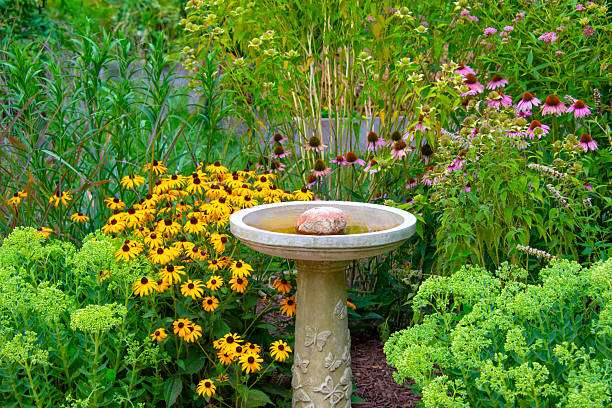
Gardens often feature green, brown, and earthy tones as a backdrop, and choosing birdbaths in these natural colors tends to attract birds more readily.
Conversely, colors that contrast sharply with the environment, even soft ones, can appear jarring and less appealing.
Why Is Environmental Integration Important?
Birds in the wild possess an evolved “environmental awareness” that allows them to judge potential dangers and food availability through color and texture.
If the colors of a bird bath are too bright, it will disrupt natural visual cues, causing birds to mistakenly believe that the area lacks safe cover or poses a predation risk.
This psychological mechanism is one of the important conditions for birds to survive in urban gardens.
Ignoring environmental integration increases stress on birds during their daily water-seeking behavior, which in the long run will affect their health and reproductive success.
Comprehensive Suggestions for Choosing Bird Bath Colors
To summarize these three common misconceptions, the choice of colors for a bird bath should consider both the bird’s perception and its integration with its environment.
The best strategy is to choose natural, soft, low-saturation colors, such as light brown, stone, gray-green, and soft blue-green.
The colors should harmonize with the background, avoiding sharp contrasts and fluorescent effects.
Additionally, the material should be considered.
Matte or frosted materials can reduce reflections and prevent light refraction from misleading birds. Light or natural colors can make the water’s edge clearly visible while providing a sense of psychological safety.
Choosing the right color not only increases bird access and usage frequency but also enhances the garden’s ecological functions, supporting birds’ thermoregulation, water replenishment, and feather preening behaviors.
Conversely, the wrong color can render the entire water dish worthless; even with ample water, birds may avoid it, creating a potential “psychological thirst.”
Long-term Ecological Effects of Color Selection
Miscolored bird baths can have a cumulative impact on bird flock behavior.
Birds will gradually reduce their approach to the area, affecting water-finding routes, social interactions, and even changing their breeding ground selection. For urban birds, these subtle behavioral adjustments can accumulate and potentially increase survival stress.
In ecological parks or home gardens, the color of bird baths is not only related to visual aesthetics, but also serves as an implicit condition supporting health and ecological functions of birds.
Every color choice affects the psychological comfort, behavioral patterns, and physiological safety of birds.
Conclusion: Though Colors May Seem Insignificant, Their Influence Is Far-Reaching.
For a bird bath, color may seem like a small detail, but it directly affects birds’ willingness to approach it, the frequency of use, and their sense of security.
Avoiding overly bright or saturated colors, avoiding psychological discomfort caused by transparent materials, and ensuring the color blends with the environment are all essential to truly realizing the ecological value of a bird bath.
A basin of water, if chosen with the right color, is not only a source of sustenance for birds, but also a vehicle for psychological safety and ecological regulation.
An incorrect color, however, can render the entire basin of water “dead,” deterring birds from approaching and slowly depleting not just the water itself, but also their sense of security and basic health.
FAQ
Does a bird bath’s color really affect how often birds use it?
Yes, birds are sensitive to color, and the wrong color may be perceived as a warning or threat, causing them to avoid approaching and thus affecting the frequency of use.
Can transparent or glass materials attract birds?
Usually not. Transparent materials increase light reflection and visual illusions, making birds feel insecure and reducing their willingness to approach.
If bird bathing must highlight colors, how can you mitigate the negative impact?
You can choose soft, low-saturation colors, or use natural tones at the edges and bottom to blend in with the environment, while avoiding highlights and fluorescent effects to reduce psychological stress.
Related Posts
Bird bath usage: 3 completely different needs of small birds and large birds
-
Posted by
 Marilyn Everett
5 common pitfalls when buying a bird bath: almost every beginner falls into these traps.
-
Posted by
Marilyn Everett