3 ways to avoid turning a bird bath into a mosquito breeding ground: 90% of people ignore this.
Bird Baths and Mosquito Breeding
Bird baths are meant to be refreshing additions to a garden ecosystem, providing a safe place for birds to drink and preen.
However, many households overlook the fact that the water basin itself can become a breeding ground for mosquitoes. Mosquitoes not only cause annoyance but can also spread diseases, affecting the health of both birds and humans.
Most people believe that simply changing the water frequently will prevent mosquitoes, but the reality is far more complex. In warm, humid environments, mosquitoes, especially mosquito larvae, multiply rapidly in stagnant water, forming large swarms within days. The depth, water volume, cleaning frequency, and location of the bird bath all directly impact the risk of mosquito breeding.
Method 1: Maintain water flow and regular regeneration
Still water bodies are ideal breeding grounds for mosquitoes. Most household bird baths , placed in stagnant environments, can harbor mosquitoes that can lay eggs within hours or even days.
Maintaining water flow significantly reduces the chances of mosquito breeding. By using miniature water pumps, drip systems, or gentle spraying, the water is kept slightly moving, satisfying birds’ preening needs while disrupting mosquito breeding grounds.
At the same time, regularly changing the water source is also very important. Simply changing the water without cleaning the sediment at the bottom and edges of the basin will leave trace amounts of organic matter, creating a breeding ground for mosquito larvae.
The scientific approach is to change the water daily, combined with weekly scrubbing, to thoroughly remove residual organic matter, microbial films, and feather debris, ensuring the water is clean and fundamentally reducing conditions for mosquito breeding.
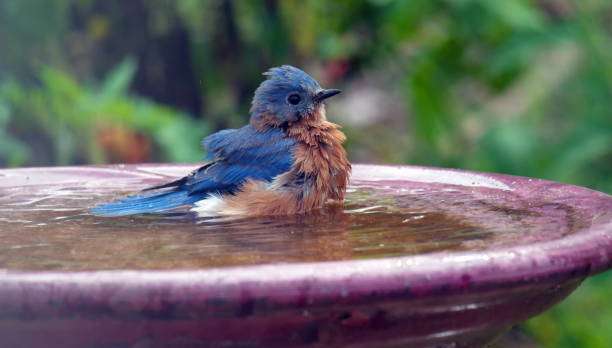
Method 2: Selection of water basin depth and material
A bird bath is closely related to mosquito breeding. While bird baths are convenient for small birds to wash their feathers, the water is easily heated by sunlight, and the increased temperature promotes the hatching of mosquito eggs.
At the same time, bird baths have a small volume of water and evaporate quickly, making it easier for mosquitoes to concentrate and breed.
Choosing a slightly deeper water basin not only provides a more comfortable environment for birds to wash their feathers but also reduces water temperature fluctuations, slowing down the hatching process of mosquitoes.
The material is also crucial. Porous materials like terracotta or stone basins can absorb trace amounts of moisture, and prolonged water accumulation or a damp environment can easily harbor mosquito eggs.
Smooth, durable, and easy-to-clean materials are better suited for controlling mosquito breeding. Each time you clean, thoroughly scrub the sides and bottom of the basin to ensure no breeding grounds remain.
By optimizing the depth and material of the basin, you can meet the needs of birds while reducing the risk of mosquitoes.
Method 3: Environmental Setup and Concealing Strategies
A bird bath directly influences mosquito breeding and bird behavior. Most people overlook the vegetation density, air circulation, and sunlight exposure around the water basin.
While dense shrubs provide cover for birds, they also obstruct airflow, creating a hot and humid environment that easily becomes a breeding ground for mosquitoes. In areas with poor wind direction and insufficient sunlight, water evaporates slowly, leading to faster mosquito larvae hatching.
For optimal bird safety, choose a well-ventilated area with partial shade or moderate sunlight.
Utilize low fences, stones, or small barriers to ensure both bird safety and air circulation.
Ensure there are no puddles or unnecessary containers near the water dish to prevent mosquitoes from breeding in the surrounding environment. Combined environmental management and cleaning maintenance can minimize mosquito breeding while ensuring the bird’s comfort and safety.
Observation and dynamic management
In addition to the three methods mentioned above, continuous observation of bird behavior and the condition of the water bowl is also crucial. Mosquito infestations can alter bird usage frequency, with smaller birds being particularly sensitive.
If reduced water bowl usage is observed, the water, bowl walls, and surrounding environment should be checked immediately. Dynamically adjusting the water bowl’s location, depth, water flow, and cleaning frequency can effectively maintain the aquatic ecological balance.
In summer and in hot and humid conditions, mosquitoes breed rapidly, and static management cannot cope with these rapid changes. Daily observation, regular cleaning, and water flow control can help identify and eliminate breeding risks in a timely manner, ensuring the safe use of the bird bath while protecting the overall health of the garden ecosystem.
Comprehensive Strategy: Making Bird Baths Healthy and Safe
Controlling mosquitoes in bird baths lies in comprehensive management. Maintaining water flow, regularly changing and cleaning the water basins, choosing appropriate depth and materials, and scientifically arranging the environment and ensuring air circulation are effective strategies for safe use.
Through these methods, bird baths not only provide birds with an ideal place to drink and preen, but also prevent mosquito breeding, maintain the ecological balance of the garden, and protect human health.
Practice has proven that a comprehensive management strategy is more effective than a single method. Running water combined with regular cleaning, and deep basins in well-ventilated locations, create a dual protective mechanism that significantly reduces the risk of mosquito breeding.
At the same time, these measures do not interfere with birds’ normal use of the water basins; instead, they enhance the garden’s ecological vitality and aesthetic appeal.
Conclusion: Mosquito control should not be ignored.
Bird baths is not only part of garden aesthetics and ecological management, but also involves health and safety. Most people only focus on bird use and water replenishment, neglecting the potential risk of mosquito breeding.
By maintaining water flow and regular replenishment, choosing appropriate water basin depth and material, and scientifically arranging the environment and sheltering locations, bird bath can be effectively prevented from becoming breeding grounds for mosquitoes. Mastering these strategies can ensure the health of birds and maintain a safe, vibrant, and beautiful garden ecosystem in the long term.
FAQ
- Can simply changing the water prevent mosquitoes?
No, simply changing the water cannot destroy the breeding environment of mosquito eggs and larvae. It needs to be combined with cleaning, running water, and deep water basin management. - bird baths more likely to breed mosquitoes than deep water basins?
Yes, bird baths heat up faster and evaporate quickly, leading to faster mosquito hatching. Deep water basins can reduce the risk and improve the bird’s experience. - Will dense vegetation around a bird bath lead to mosquito breeding?
Yes, dense vegetation can obstruct air circulation, creating a hot and humid environment that easily becomes a breeding ground for mosquitoes. Vegetation should be arranged reasonably and ventilation should be ensured.
Related Posts
5 reasons why bird baths often have a persistent odor: it’s not just because the water is dirty.
-
Posted by
 Marilyn Everett
4 deadly problems with bird bathing in the summer heat happening in most gardens
-
Posted by
Marilyn Everett
3 key frequencies for proper bird bath cleaning: Doing it wrong can make your bird sick.
-
Posted by
Marilyn Everett